
Last updated October 16, 2026
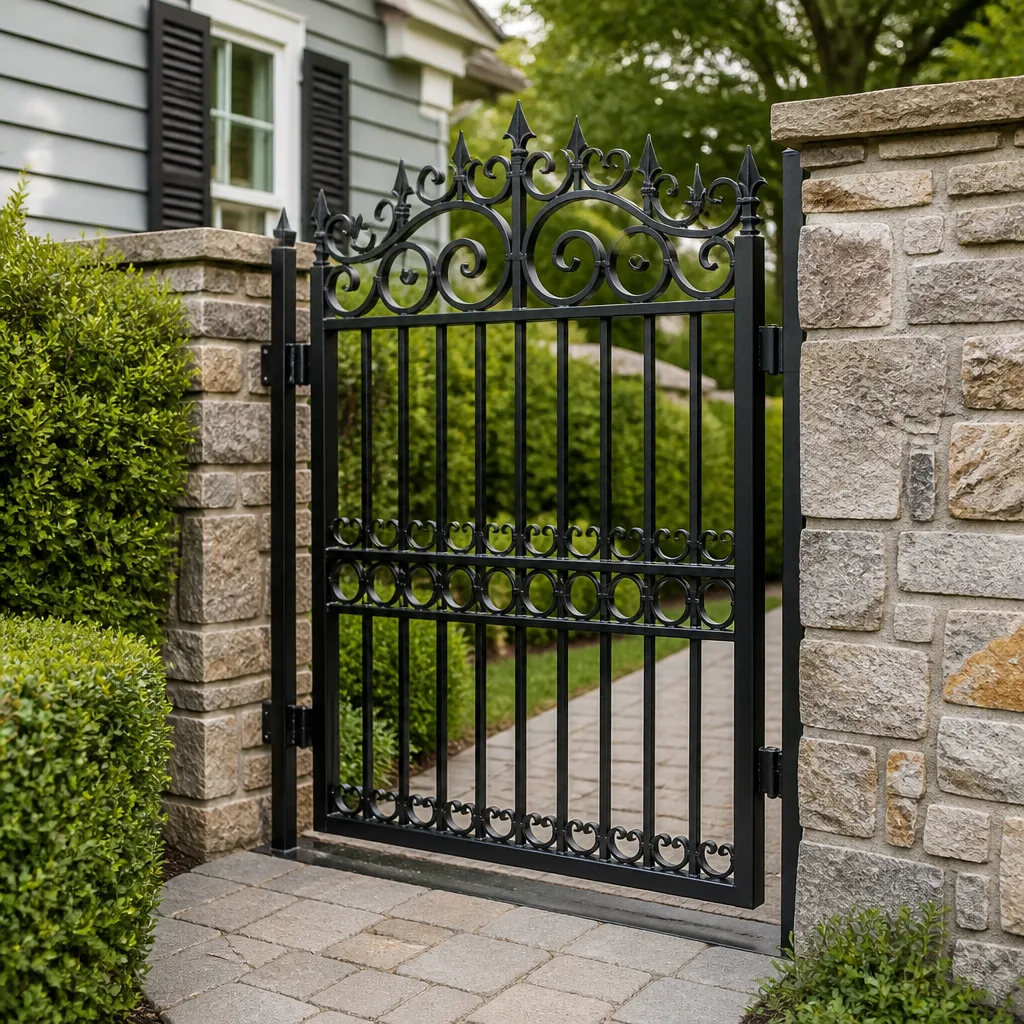 Wrought iron
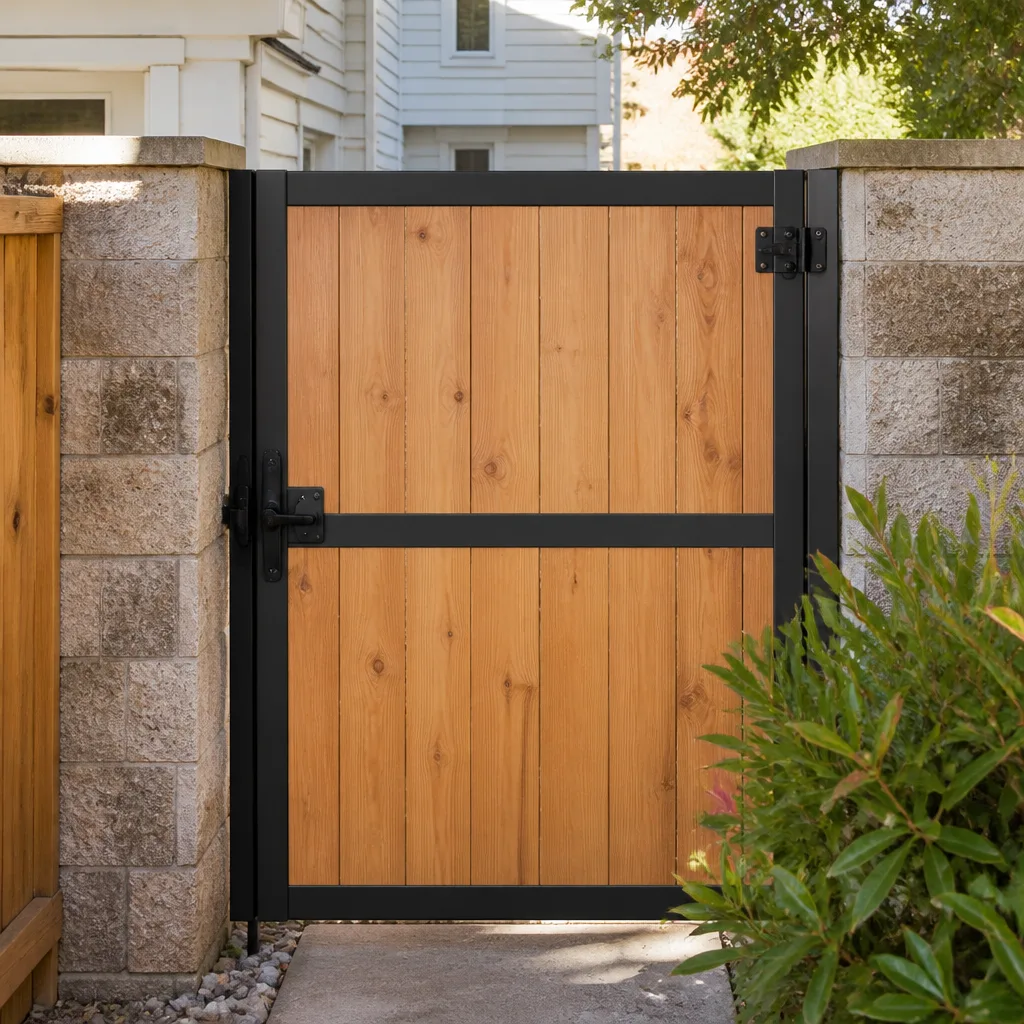 Wood & steel frame
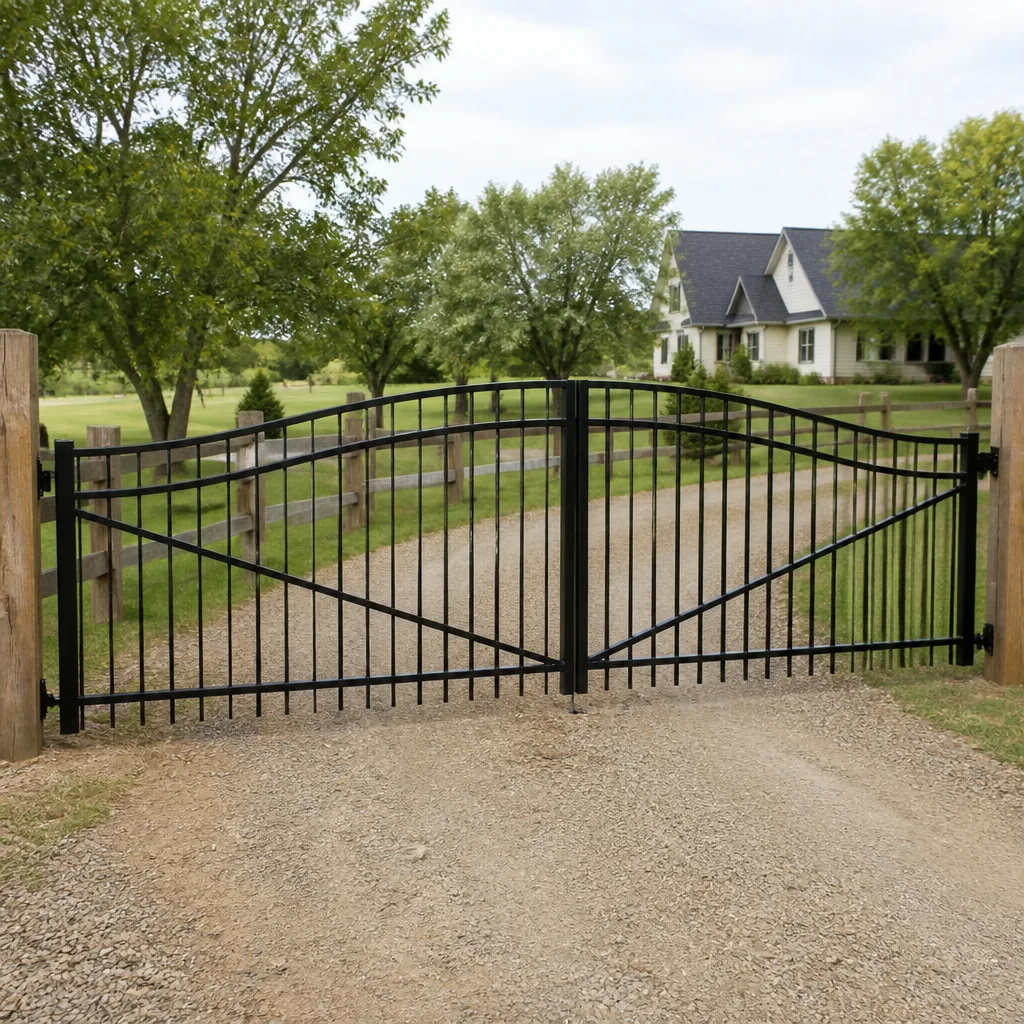 Farm & ranch
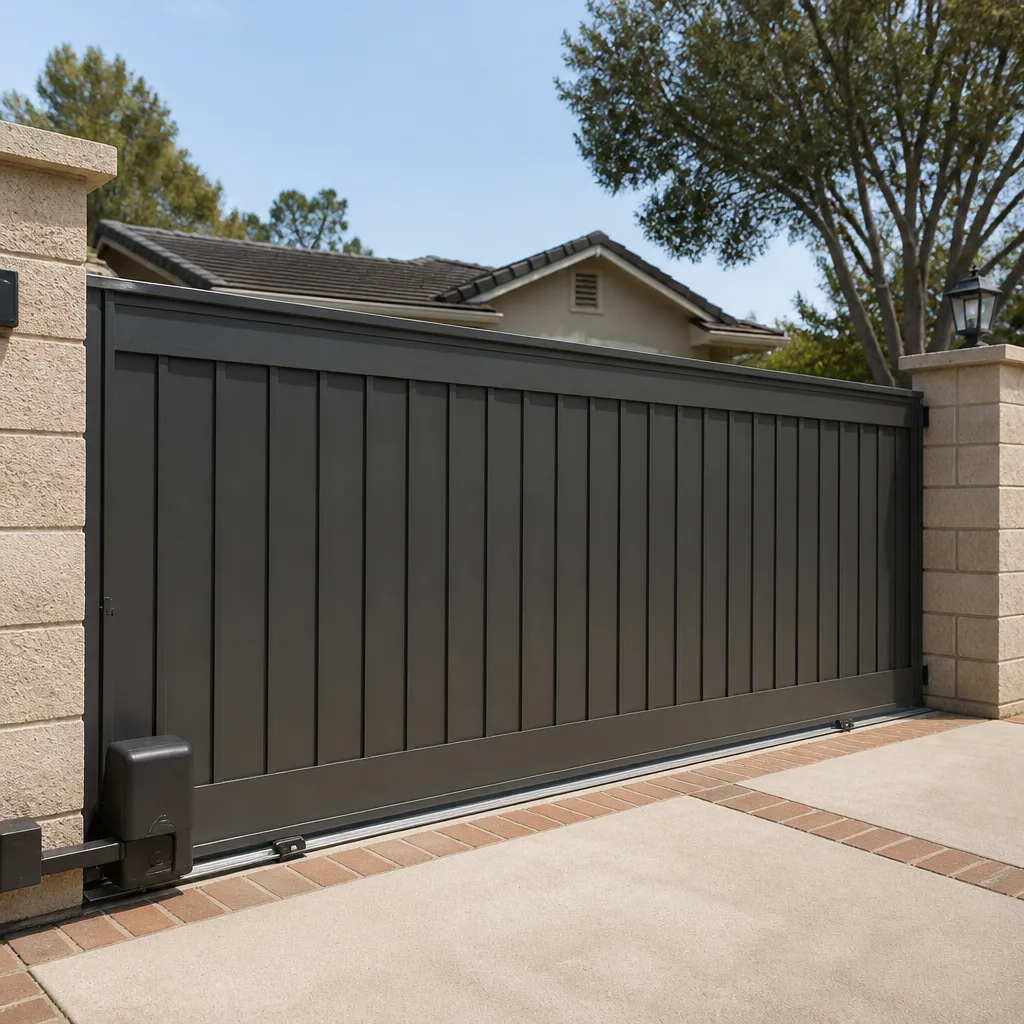 Sliding driveway gates
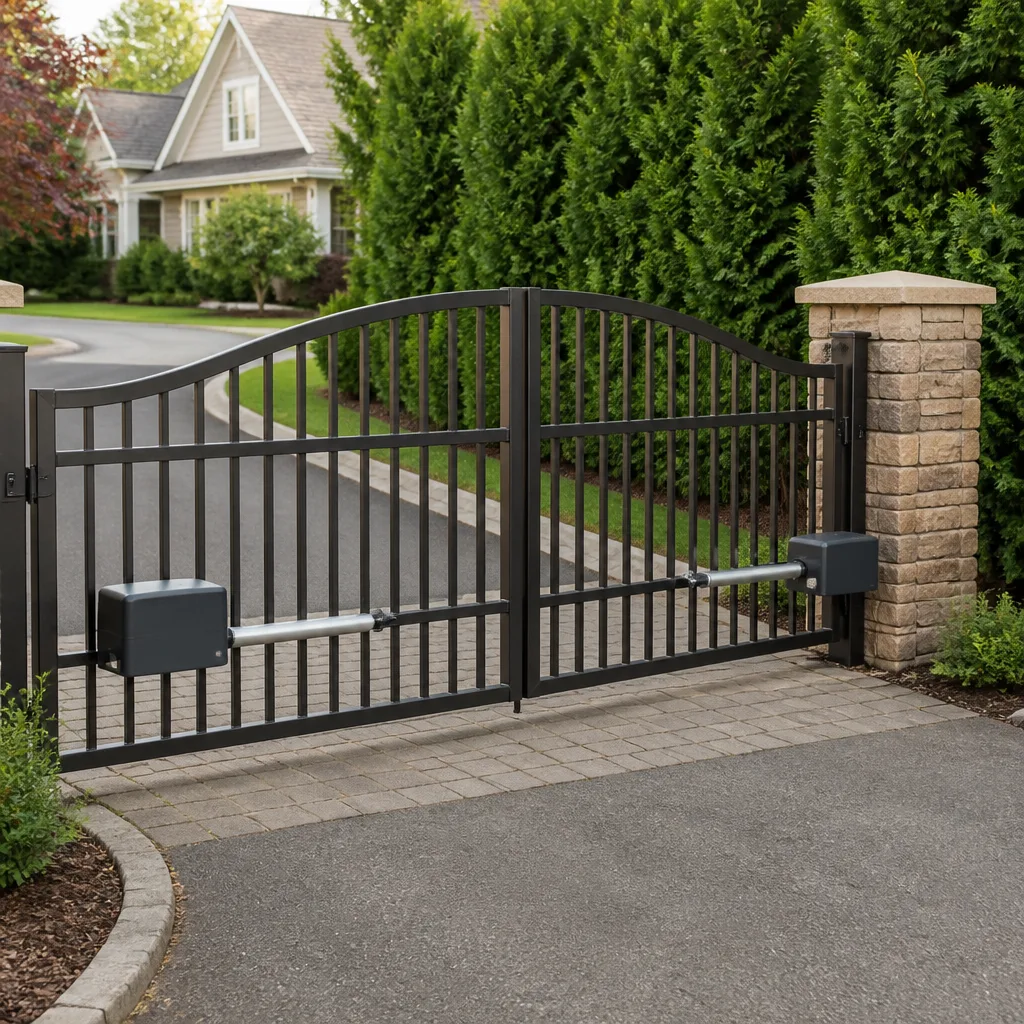 LiftMaster operators
Free on-site gate assessment - hinges, posts, and your LiftMaster or Nice gate operator checked before anything is quoted
The assessment is free and the quote is the invoice.
Get your free estimateGate Repair Warning Signs: A Miami Homeowner’s Reference Guide
Most gate failures in Miami don’t happen suddenly. They announce themselves weeks, sometimes months, before the final breakdown – a half-second hesitation, a new sound, a slight lean that wasn’t there last spring. The problem is that a gate that “still works” gets ignored. And in Miami, where salt air, humidity, and limestone soil work on gate hardware year-round, ignoring those early signals costs money. This guide walks you through what we see on our Gate Repair services calls across Miami, from Coral Gables to Pinecrest, and what each warning sign costs to fix at stage one versus stage three.
Styles & brands we work with
Quick Answer
The most common gate repair warning signs in Miami are a hesitation before the gate moves, a grinding or clicking sound during travel, visible rust pitting on wrought iron, a gate that needs a second button push, and hairline cracks spreading from the concrete footing. Catching these early typically means a $150 – $400 repair. Waiting until the gate locks up completely usually means $800 – $2,400 for a new operator, board, or hinge replacement.
Table of Contents
- The Three Sounds a Gate Makes Before a Mechanical Failure
- Visual Warning Signs on the Gate Post and Concrete Footing
- How to Read a Gate’s Hesitation Pattern
- Why a Gate That “Works on the Second Try” Is Already in Late-Stage Failure
- Miami-Specific Corrosion: The Progression from Surface Rust to Structural Weakness
- What Warning Signs Cost at Each Stage: A Miami Price Breakdown
- Common Mistakes to Avoid
- When to Call a Professional
- Frequently Asked Questions
- The Bottom Line
The Three Sounds a Gate Makes Before a Mechanical Failure
Gates are not silent machines. They have a normal operating sound – a steady hum from the operator, a soft roll from the wheels. When the sound changes, the gate is telling you something specific. Here are the three sounds we hear most often on Miami service calls, and what each one means.
Grinding
Grinding is metal-on-metal contact where there shouldn’t be any. In most cases, it’s a bearing that’s lost its grease and is now chewing through its own race. On a swing gate, the top hinge bearing is the usual culprit; on a slide gate, it’s the roller wheels on the track. A gate that grinds for a few weeks will eventually twist the leaf slightly out of square, and then the actuator – the motorized arm that physically pushes the gate open – starts working against a bind. That’s when a $40 bearing becomes a $900 actuator swap. In Miami’s coastal air, we see grinding accelerate because the grease degrades faster near salt water. If your gate sounds like a metal file dragging across a rail, don’t wait.
Clicking at the End of Travel
A single click when the gate reaches fully open or fully closed is normal – that’s the limit switch cutting power. But a rapid clicking, or a click that repeats three or four times after the gate has stopped, points to a different problem. It usually means the limit switch itself is arcing, or the operator is trying to send power to a capacitor that can no longer hold the charge. On LiftMaster and BFT operators we service in Miami, this pattern is a known early sign of control board failure. The board is overheating, and the clicking is the relay cycling. Board replacement runs $280 – $550 on most residential operators. A limit switch adjustment early on is often under $150.
Chain Slap
Chain slap is the sound of a drive chain hitting the channel or cover plate as the gate moves. It means the chain has stretched beyond the tensioner’s range. A stretched chain is more than a noise issue – it causes the operator to work harder, which shortens its life and can throw the gate’s travel timing off. On slide gates, chain slap is often the first audible warning of track misalignment or worn sprockets. The fix early is a tension adjustment or a chain replacement, typically $120 – $260. Ignored, the chain can jump a tooth, and then the gate stops mid-travel. At that point, you’re often looking at replacing sprockets and recalibrating the entire operator.
We’ve seen all three of these patterns on gates in neighborhoods from Kendall to North Miami. The sound changes first. The breakdown follows.
Visual Warning Signs on the Gate Post and Concrete Footing
Before a gate becomes visibly misaligned, the evidence is already there if you look at the post and the concrete around it. Miami’s soil – a mix of limestone, sand, and organic muck depending on the neighborhood – moves with the wet season and the dry season. That movement puts stress on the gate post, and the post responds in predictable ways.
Hairline Cracks Radiating from the Footing
Look at the concrete pad where the gate post is set. If you see cracks running outward from the post base, the footing is shifting under load. These cracks usually start as thin spider lines and widen over the course of a year. The gate may still open and close, but the post is losing its grip on the soil. In Miami’s rain season, water gets into those cracks, and the expansion and contraction cycle pushes the footing further out of position. Fixing the footing early – before the post actually moves – means epoxy injection or a new concrete collar, usually $300 – $700. Once the post has visibly tilted and the gate drags on the ground, you’re looking at removing and resetting the entire post, which can run $1,200 – $2,800 depending on post size.
Gap Between the Post Base and the Concrete
A visible gap under the post base plate is another early sign. It means the anchor bolts are loosening or the concrete is eroding around them. Check for this after a heavy Miami rainstorm. If the post base plate wobbles when you push on the gate with one hand, the anchor bolts have lost tension. Left alone, the post can shear the bolts, and the gate falls. That’s a safety hazard, not just a repair item. Any gate repair company in Miami should be able to re-tension and re-grout the base for a few hundred dollars if it’s caught early.
Rust Streaking Down from the Weld Points
On wrought iron and steel gates, the welds are the first areas to fail because the welding process burns off the protective coating. Rust streaks – the orange-brown lines running down from a joint – mean the weld has begun to oxidize. You’ll see this on gates all over Miami, especially within a few miles of the coast. When the streaks are superficial, the fix is grinding, priming, and repainting, typically $200 – $500 per section. When the streaking is accompanied by visible pitting at the weld, the joint has lost structural strength, and the section may need to be re-welded or replaced.
The concrete and post tell you what the gate leaf is about to do. Read them before the gate starts scraping the driveway.
How to Read a Gate’s Hesitation Pattern
A gate that hesitates before moving is not “working fine but a little slow.” It’s drawing excess current, and that pattern, left alone in Miami’s heat, typically leads to a burned control board within 60 to 90 days. But not all hesitation is the same. Here’s how to tell the difference between the three common causes.
Step 1: Watch Where the Hesitation Happens
- Hesitation at the very start of travel. The operator hums for a second or two before the gate moves. This is most often a failing motor capacitor. The capacitor provides the initial jolt of current to start the motor. A weak capacitor means the motor struggles to get going. In Miami’s summer heat, capacitors degrade faster. Replacement is typically $80 – $180 parts and labor.
- Hesitation mid-travel. The gate starts fine, pauses partway, then continues. On a slide gate, this usually means a bad spot on the rack gear or a roller wheel beginning to bind. On a swing gate, it often points to a hinge that’s starting to seize. Mid-travel hesitation is a mechanical issue, and it will worsen until the gate stops entirely.
- Hesitation when reversing. If the gate opens fine but hesitates before closing, or vice versa, the issue is often the limit switch or the gate’s safety edge. The operator is momentarily confused about its position.
Step 2: Check the Battery Backup and Photocell
Low battery backup is a common cause of hesitation on systems that have one. In Miami, where power surges from lightning storms are frequent, battery backups take a beating. If your gate hesitates only when opening, and you hear a slower-than-normal hum, have the battery tested. A replacement battery runs $60 – $150. A dirty photocell – the little sensor at knee height that stops the gate if something’s in the path – can also cause hesitation. If the photocell lens is dusty or partially blocked by a palm frond, the operator may pause while it re-checks the beam. Cleaning the lens is a five-minute fix, and it’s free if you do it yourself.
Step 3: Know When It’s the Capacitor
Here’s the pattern we see consistently: a failing capacitor causes hesitation that gets longer over a few weeks. The gate eventually won’t start at all without a manual push. That’s when the homeowner calls us. If it’s still just a capacitor, the bill is low. If the motor has been trying to start against a stuck capacitor for too long, the windings overheat and burn. Then it’s a full operator replacement.
If your gate hesitates more than a second, treat it like a check-engine light. It’s the cheapest warning sign you’ll ever get.
Why a Gate That “Works on the Second Try” Is Already in Late-Stage Failure
This is the one we see homeowners tolerate the longest. You press the remote. Nothing happens. You press it again, and the gate opens. It’s easy to shrug that off. But a gate that needs a second command is not just being finicky – it’s already in late-stage failure on at least one component.
What’s Actually Happening
The first press sends a radio signal to the receiver on the control board. The board gets the signal but fails to execute the command. The failure could be several things: a failing relay on the board, a weak capacitor that won’t start the motor on the first attempt, a limit switch that’s lost its calibration, or a receiver that’s losing sensitivity. None of these are intermittent in the way a garage door opener is. Gate operators are heavier-duty machines, and their failure patterns are progressive.
The Cost Difference
Here’s the reality of Miami gate repair pricing. If the issue is caught at the “second try” stage, the repair usually involves replacing a capacitor, a limit switch, or a relay – $120 – $350 in most cases. If the gate is allowed to progress to a complete lockout, the bill jumps. A burned control board runs $280 – $550 by itself. A motor that has seized from repeated starts will add $500 – $900. And if the gearbox has been stressed by the hard starts, you’re replacing the entire operator. Most residential operator replacements in Miami run $1,100 – $2,400 installed.
The pattern is consistent: every week a gate is allowed to “work on the second try,” the odds of a complete failure increase. We tell our customers the same thing we’d tell a neighbor. If the gate needs two button pushes, it’s already asking for help.
Miami-Specific Corrosion: The Progression from Surface Rust to Structural Weakness
Corrosion is the most predictable gate problem in Miami, and the most misunderstood. Salt air, high humidity, and the city’s wet-dry seasonal cycle work on metal gates year-round. What starts as a cosmetic issue becomes a structural one, and the progression is well-defined.
Stage 1: Surface Rust
Surface rust looks like a flat orange-brown coating on the metal. It shows up first at the base of the gate, on the bottom rail, and around the hinges. If you rub a finger over it and it leaves a dry powder but the metal underneath is still solid, you’re at stage one. A wire brushing, a rust-converting primer, and a coat of paint stop it. On a standard Miami driveway gate, that’s a $200 – $400 job if done by a professional. Do it before the next rainy season.
Stage 2: Pitting
Pitting is what you have when the rust has eaten small craters into the metal. You’ll see it as rough, uneven patches where the surface is no longer smooth. At this stage, the gate is losing thickness at those points. In Miami’s coastal neighborhoods, pitting on a five-year-old untreated gate is common. A pitted section can sometimes be saved with grinding and heavy priming, but the metal is thinner and will re-rust faster. Repair at this stage runs higher – often $400 – $800 for a full gate refinish, assuming the pits haven’t gone deep.
Stage 3: Structural Weakness
Structural weakness means the metal has lost enough material that it can flex or crack under the gate’s own weight. You’ll see this as a gate leaf that sags at the latch end, or a bottom rail that crumbles when you kick it gently. At this point, the affected sections need to be cut out and replaced, or the entire gate leaf needs to be re-fabricated. In Miami, full gate leaf replacement runs $1,500 – $4,000 for an average residential driveway swing gate. The difference between the cost at stage one and stage three is the difference between a repaint and a rebuild.
Wrought iron gates are common across Miami – from the older homes in Coconut Grove to the newer builds in Doral. The salt exposure is worse near the water, but even inland gates deal with the humidity. Inspect your gate’s finish every spring, before the rains start.
What Warning Signs Cost at Each Stage: A Miami Price Breakdown
One of the first questions homeowners ask us is “how much will this cost if I leave it alone?” Here’s a straight answer, based on what we’ve billed on gate repair jobs across Miami over the years. These ranges are for residential gates. Commercial gates run higher.
- Hesitation at start of travel (best case): Capacitor replacement – $80 – $180. Wait three months: burned control board – $280 – $550. Wait until lockout: full operator replacement – $1,100 – $2,400.
- Grinding hinge bearing: Bearing lubrication or replacement – $60 – $150. Wait: actuator replacement due to bind – $700 – $1,300.
- Chain slap: Chain tension adjustment – $100 – $150. Wait: jumped tooth, sprocket damage, full recalibration – $400 – $800.
- Surface rust: Spot treatment and paint – $200 – $400. Wait until pitting: full refinish – $400 – $800. Wait until structural failure: partial or full leaf rebuild – $1,500 – $4,000.
- Second-try gate: Relay or limit switch replacement – $120 – $350. Wait until lockout: board and possible motor – $500 – $1,100.
- Hairline footing cracks: Epoxy injection – $300 – $700. Wait until post tilt: post removal and reset – $1,200 – $2,800.
When you call us at Portcullis Gate Repair, the price is quoted and written down before any work starts. For How to Hire a Gate Repair Contractor in Miami: A Step-by-Step Guide, see our detailed breakdown. You’ll know the number before a single bolt is turned. That’s the Kingswell Guarantee, and it’s on every invoice we write. No surprises at the door.
If you’re reading this and your gate is doing one of these things, don’t wait. The cost gap is real. We see it every week on jobs across Miami, and the homeowners who catch it early always spend less. If you’re not sure which stage you’re at, call us and describe the sound. We’ll give you an honest read over the phone. If it needs service, our technician will arrive with a written price before any work begins. That’s how we’ve operated as a Portcullis Gate Repair Miami home service since 2008.
Common Mistakes to Avoid
- Greasing a grinding gate without finding the source. Grease quiets the noise temporarily, but if the bearing is already worn out, the grease just buys a few more weeks before the real failure. In Miami’s heat, the grease thins quickly anyway. Find the wearing part, then fix it.
- Ignoring a gate that hesitates because it’s “not that bad yet.” Hesitation is the cheapest failure to fix. The longer it goes, the more it costs. We’ve replaced full operators on gates that started with a $90 capacitor.
- Painting over rust without removing it. Paint seals the rust in, and it keeps eating the metal underneath. You’ll see the streaks return in a few months. The rust has to be removed or converted first.
- DIY attempt on a spring-loaded gate. Gates have high-tension springs and heavy counterweights. A gate leaf falling can cause serious injury. Leave tension adjustments to a trained technician. This isn’t a door hinge.
- Assuming the gate is just misaligned when it’s actually a footing issue. Many homeowners keep adjusting the gate leaf instead of looking at the post. If the post keeps moving, the gate will keep going out of alignment. Fix the footing, not the leaf.
- Delaying a repair because the remote “works most of the time.” “Most of the time” is the final stage before “not at all.” By the time a gate completely stops responding, the failed part has often taken something else with it.
- Shopping on price alone instead of checking the guarantee. A cheap repair with no written guarantee is a gamble. In Miami, we’ve followed behind companies that replaced a part and disappeared. If the repair isn’t backed in writing, you’re paying twice when it fails. The Gate Repair in Miami work we do always carries the 365-Day Done Right Promise.
When to Call a Professional
If your gate hesitates, grinds, clicks, or needs a second button push, call a professional before the next storm season. For Seasonal Gate Repair Care for Miami: Year-Round Homeowner’s Guide, check our maintenance calendar. If you see hairline cracks spreading from the footing, or rust that has progressed to pitting, don’t wait for the gate to sag. These are not cosmetic issues. They are the gate telling you what’s about to fail.
Portcullis Gate Repair Miami offers free estimates across the Miami area. Our technicians are background-checked, uniformed, and trained on nine major gate-operator brands, including LiftMaster, FAAC, and Elite. Every job gets a written price before any work starts and a written Kingswell Guarantee on the repair. Call (850) 409-8032 to schedule an estimate. A live person answers, 24 hours a day, seven days a week.
Frequently Asked Questions
The first signs are almost always audible or visible before they are mechanical: a hesitation when the gate starts moving, a grinding or clicking sound during travel, chain slap on a slide gate, rust pitting on the metal, or hairline cracks spreading from the concrete footing. Catching any of these early means a repair in the $80 – $400 range instead of a $1,000-plus replacement. If you’re not sure what you’re hearing, we’ll walk through it over the phone at (850) 409-8032.
Most residential gate repairs in Miami run between $150 and $900, with simple fixes like capacitor replacements at the low end and board or actuator replacements at the high end. Full operator replacements run $1,100 – $2,400 on average. We quote every job in writing before any work starts, so the price is fixed before the technician opens the gate. Call us for an exact quote – estimates are free.
A gate that hesitates before opening is usually dealing with a weak motor capacitor, a dirty photocell, or a low battery backup. A failing capacitor is the most common cause and the cheapest to fix – typically $80 – $180. If the hesitation has been getting worse over a few weeks, it’s a capacitor or a failing relay. Don’t let it sit. Hesitation in Miami’s heat regularly leads to a burned control board within a couple of months.
If your gate is stuck open or closed and you can’t secure your property, call us at (850) 409-8032. We answer the phone 24/7 with a live person, and we’ll give you a straight answer on scheduling. Same-day service depends on availability, but a gate that won’t close is a security issue, and we treat those calls first.
A full installation includes the gate leaf or gate sections, posts set in concrete, hinges or a track system, the operator (the motorized unit), safety edges or photocells, and the control wiring. We handle the power run and the safety edges. Every installation gets a written price before work begins and a written guarantee when we’re done. You can read more on our Gate Installation in Miami page. For an in-person estimate, call us and we’ll schedule a free measure.
We handle the full electric system – operator, control board, remote receivers, keypads, photocells, safety edges, and the power supply. We service nine major operator brands, including LiftMaster, BFT, and Mighty Mule, so the technician who arrives already knows your system. You can see the full scope of what we do on our Electric Gate Repair in Miami page. If your gate is opening on its own or not responding, call us before you try to bypass anything.
The Bottom Line
Your gate tells you when something is wrong. The hesitation, the grinding, the click, the rust streak, the crack in the concrete – these are the signs. In Miami, where salt and humidity and shifting soil work on gate hardware every day, the signs show up earlier than they do in drier cities. The homeowners who act on them spend a few hundred dollars. The homeowners who don’t spend a few thousand. If your gate is doing any of the things in this guide, get a written estimate before it gets worse. That’s the whole point of the Kingswell Guarantee: you know the price, you know the window, you know the work is backed in writing. Call (850) 409-8032 and tell us what your gate is doing. We’ll take it from there.
Written by Dean Prescott, Owner at Portcullis Gate Repair Miami, serving Miami since 2008.
See the difference
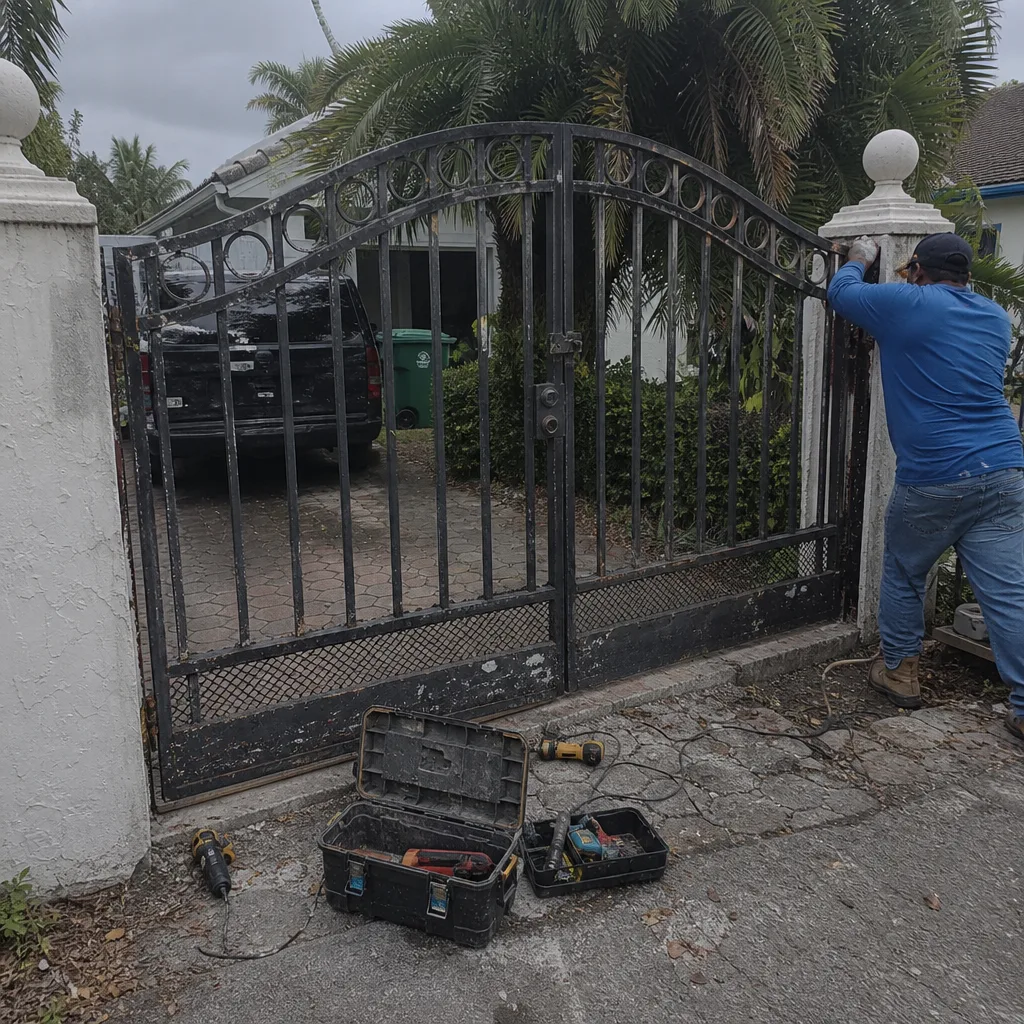 Before
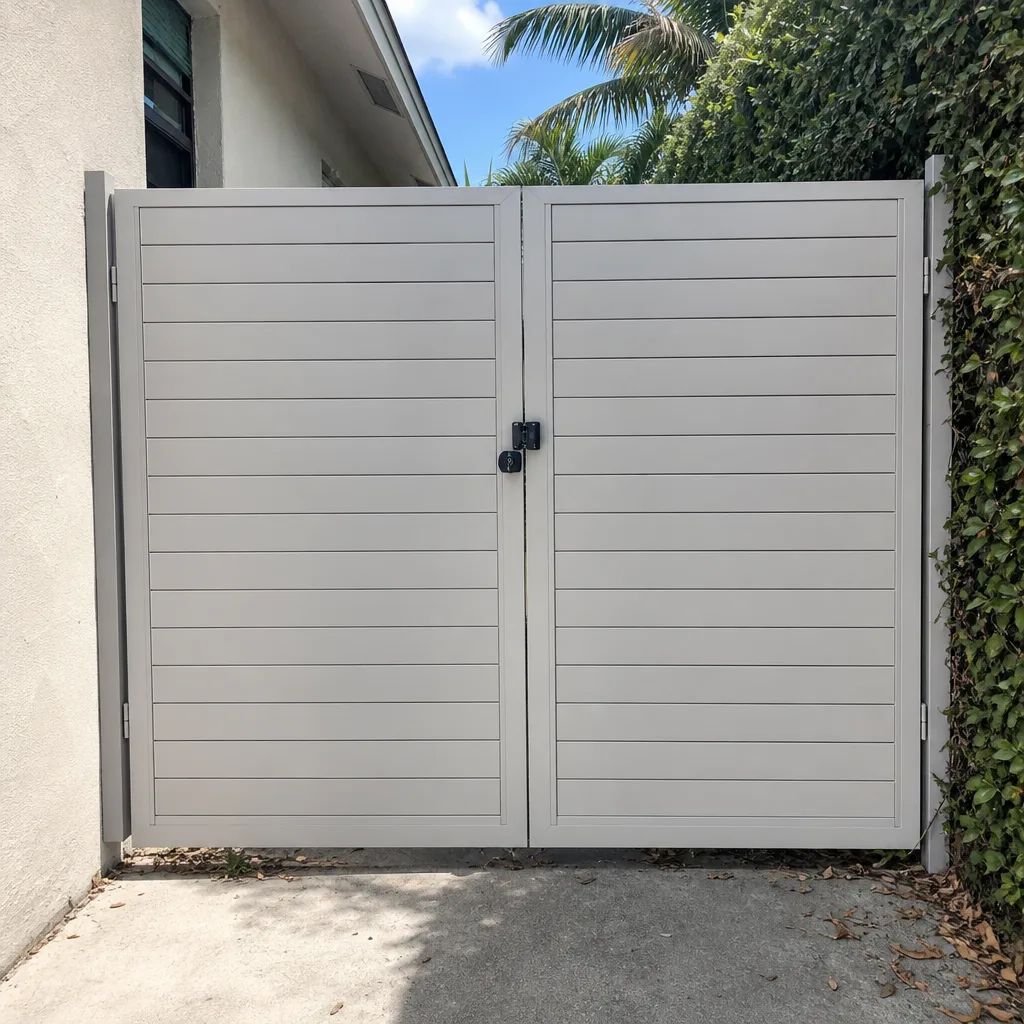 After
After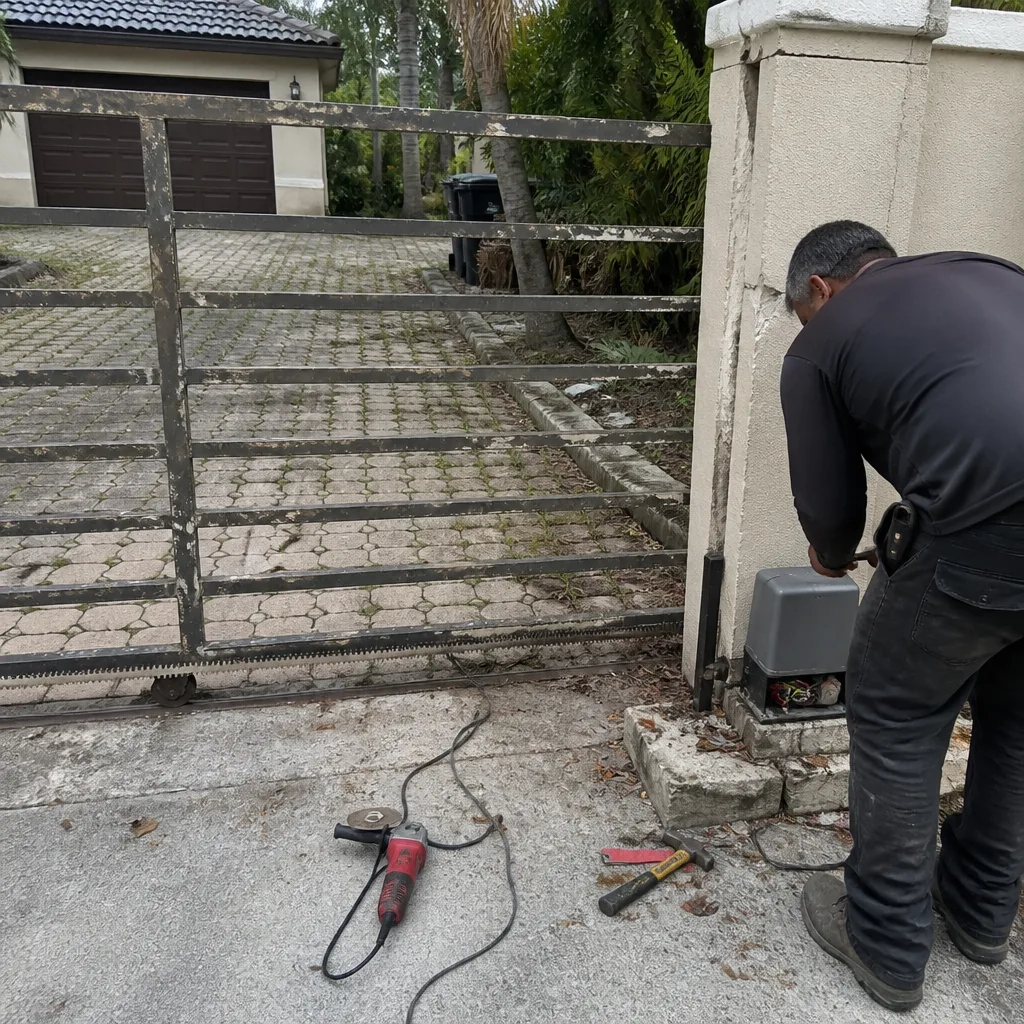 Before
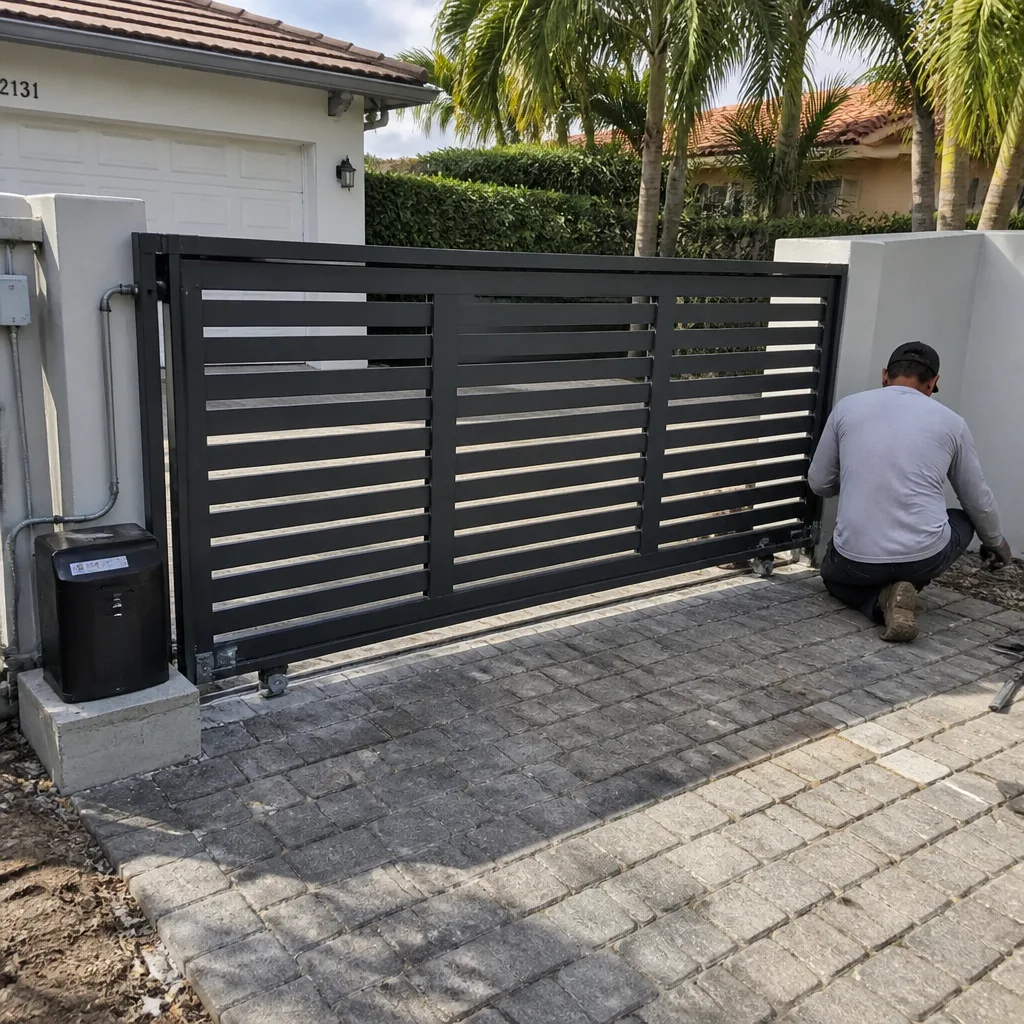 After
After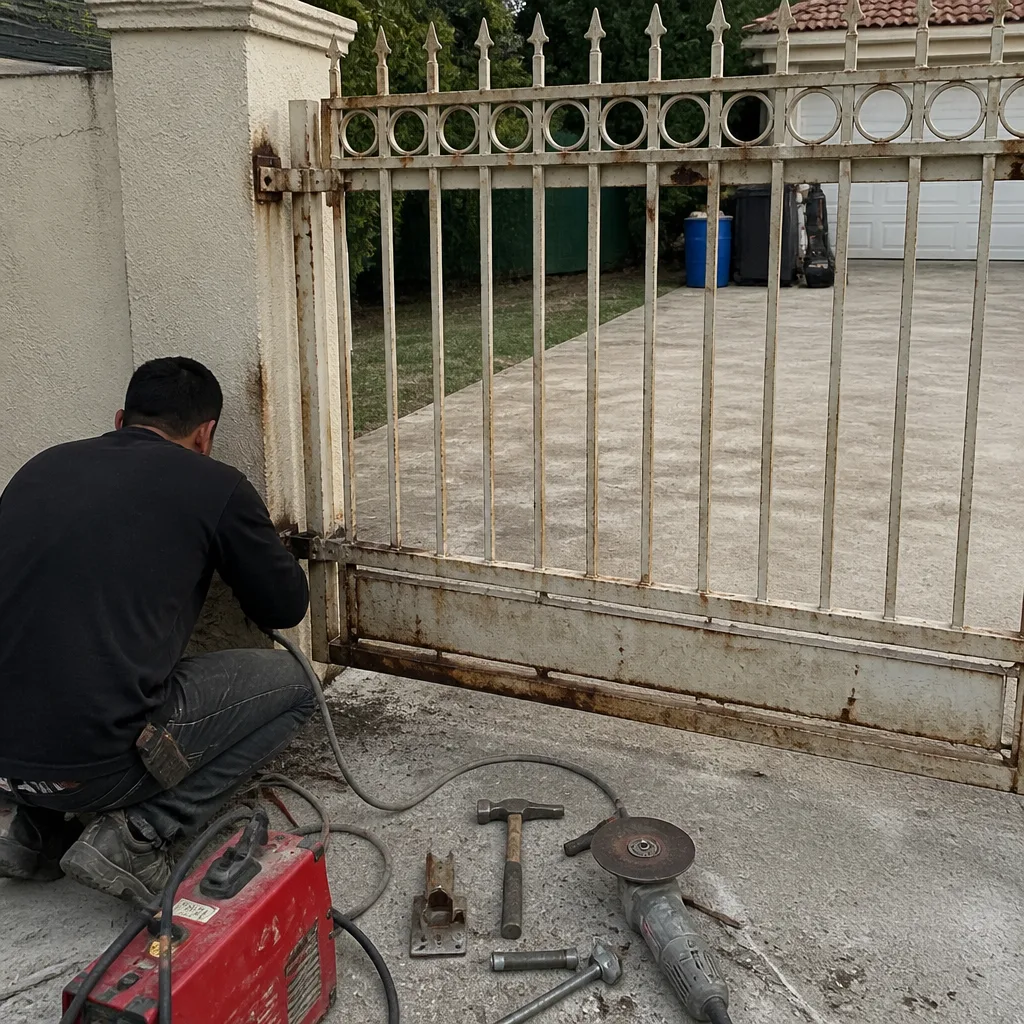 Before
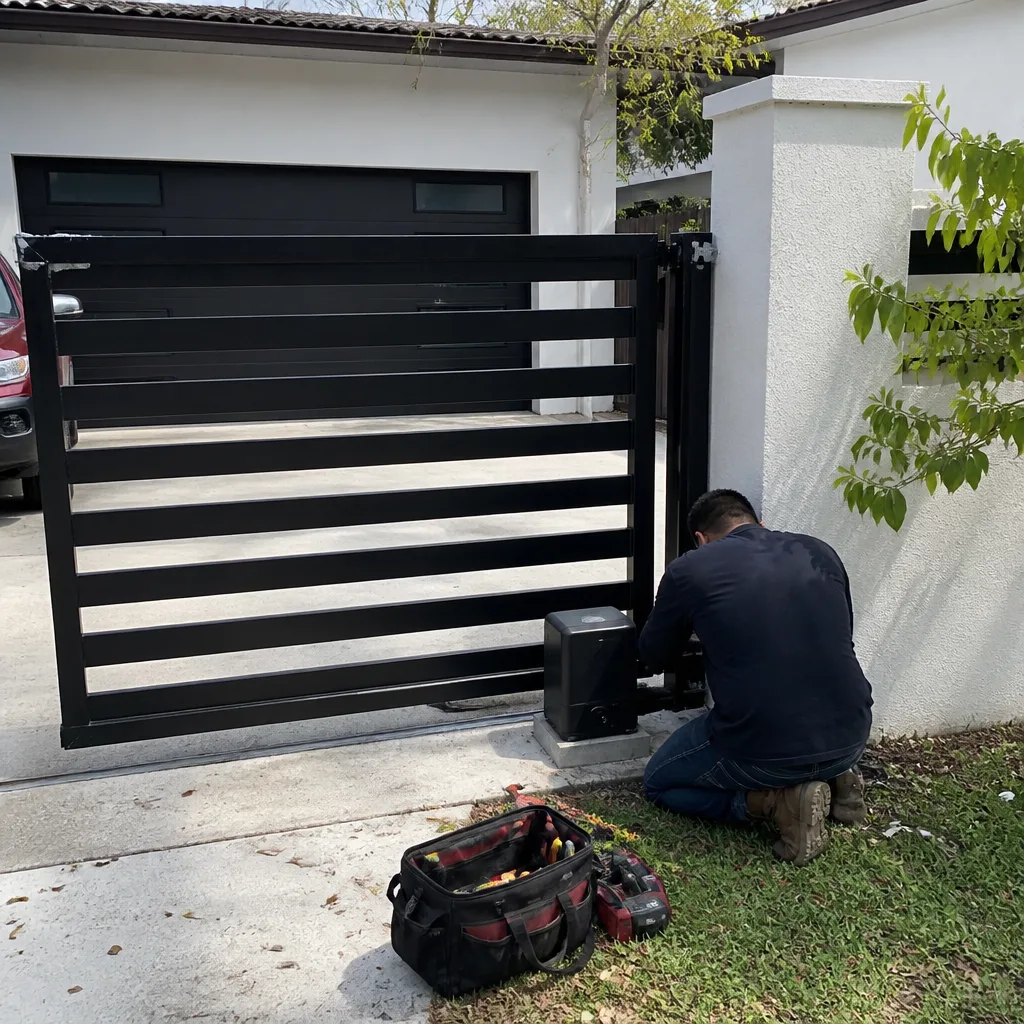 After
After