
Last updated October 16, 2026
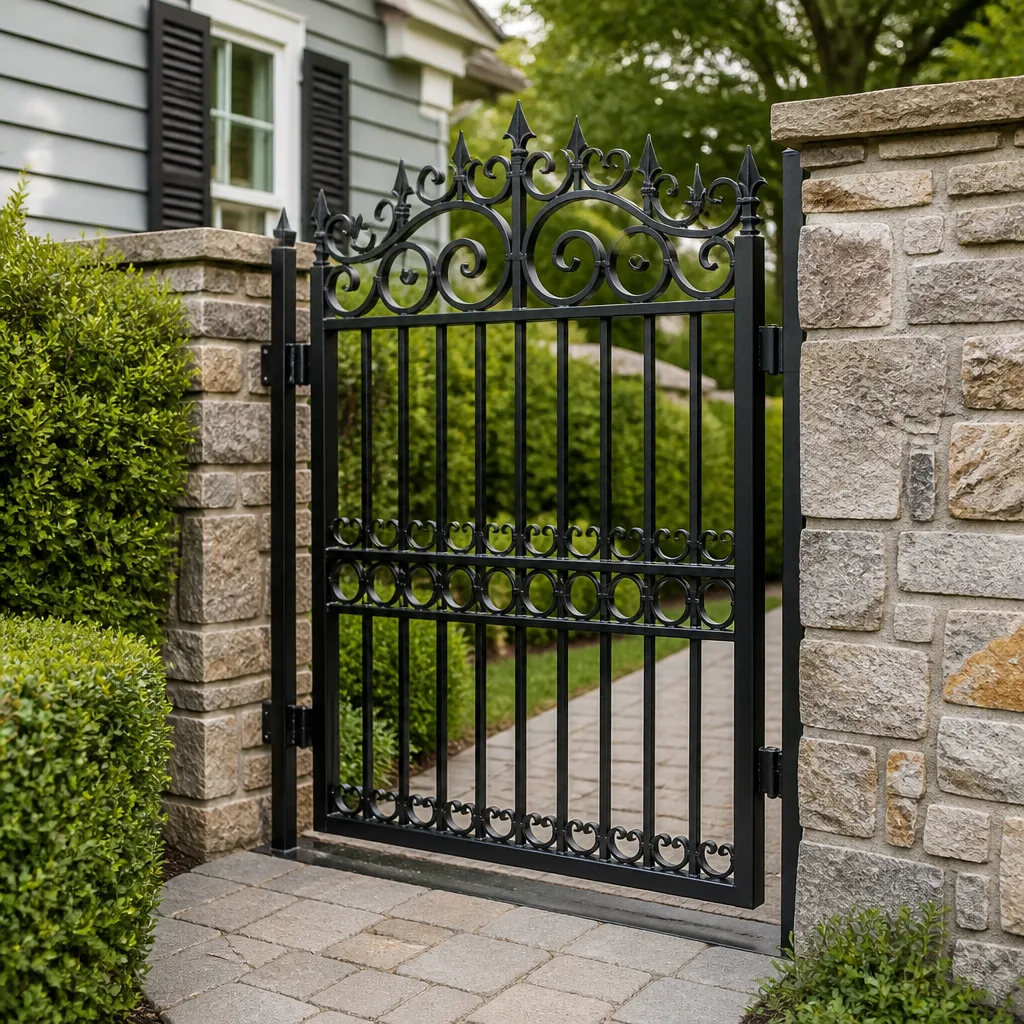 Wrought iron
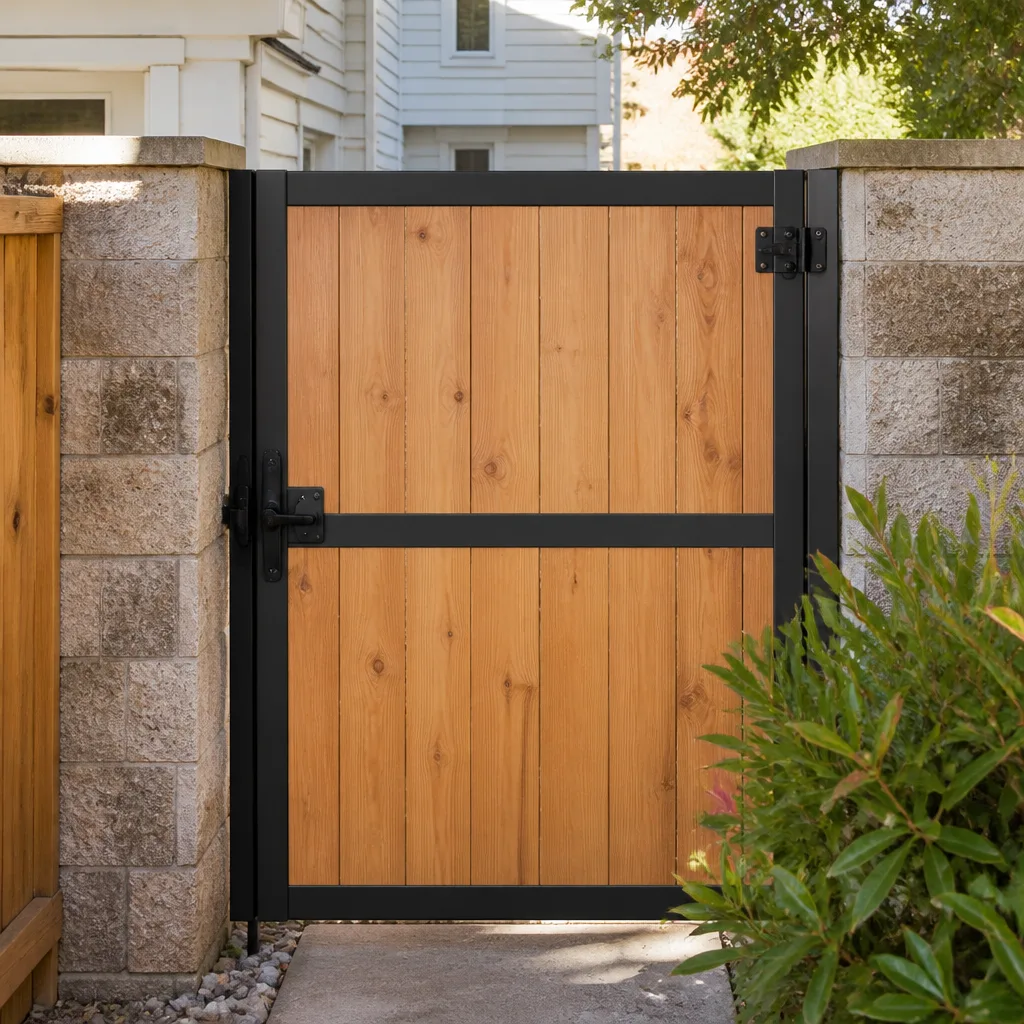 Wood & steel frame
 Farm & ranch
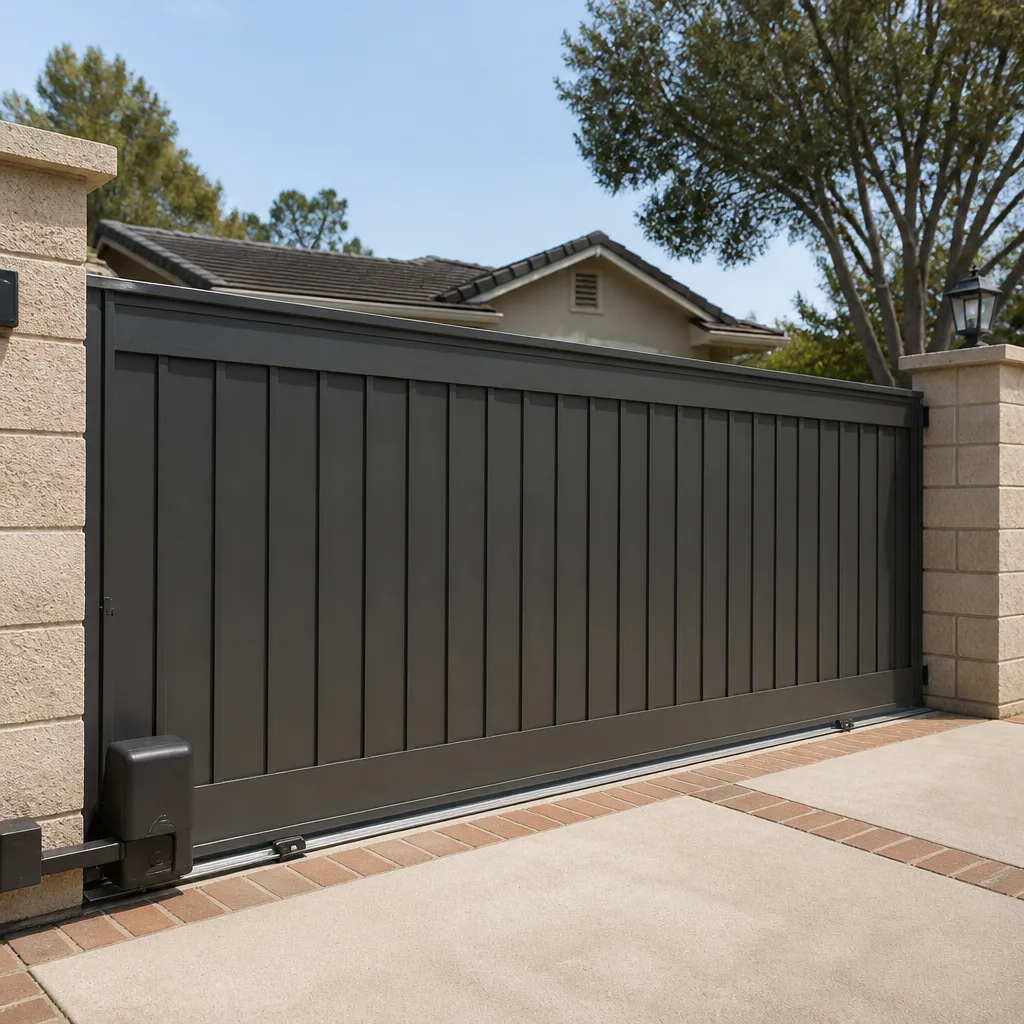 Sliding driveway gates
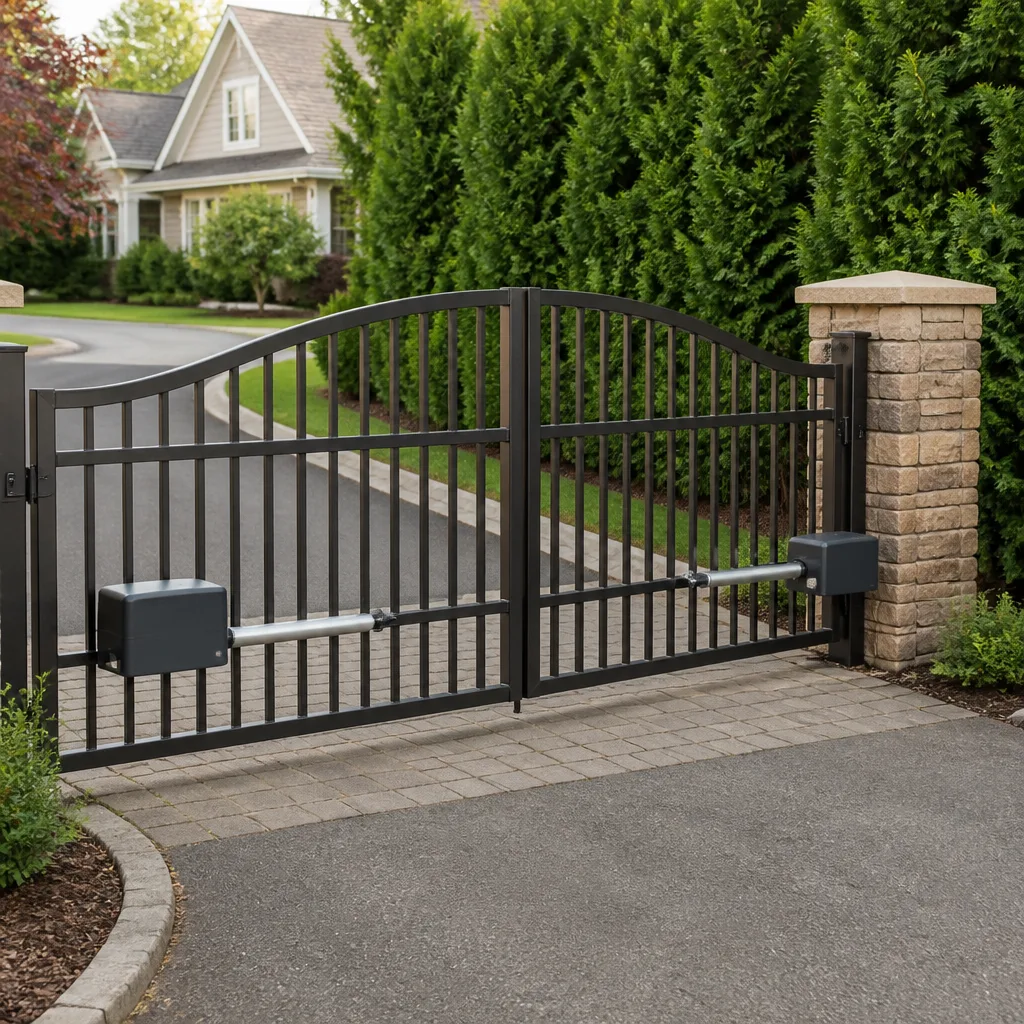 LiftMaster operators
Free on-site gate assessment - hinges, posts, and your LiftMaster or Nice gate operator checked before anything is quoted
The assessment is free and the quote is the invoice.
Get your free estimateGate Repair Maintenance Checklist for Miami Homeowners
Here’s a number that surprises most Miami homeowners: in our service records going back to 2008, the single most skipped maintenance task on automatic gates is lubricating the chain or belt drive before rainy season. It’s also the single most common reason a $90 service call turns into a $600 motor replacement. Miami’s humidity and salt air don’t just age gates faster than inland climates do – they age them differently. A maintenance checklist written for Atlanta or Charlotte will tell you to worry about falling leaves and freeze-thaw cycles. Neither of those exists here. What exists is a six-month rainy season that rusts uncoated steel in weeks and a hurricane window that turns a loose gate post into a projectile. This guide rebuilds the maintenance calendar around Miami’s actual two seasons – hurricane season and dry season – and gives you the exact tasks, lubricants, tests, and paperwork that keep a gate running through both.
Quick Answer
In Miami, the most effective gate maintenance schedule runs on two seasons, not four: a June-through-November hurricane-season plan focused on lubrication, drainage, and wind-load hardware checks, and a December-through-May dry-season plan focused on electrical connections, operator calibration, and cosmetic sealing. The highest-priority quarterly tasks are lubricating the chain or belt with a marine-grade product, testing the auto-reverse and photocell sensors, checking gate post plumb and footing drainage after heavy rain, and photographing everything with a date stamp. Most Miami gate failures are postponed by about five minutes of monthly attention and a written record each homeowner files by hand or phone, even before calling a professional.
Styles & brands we work with
Table of Contents
- The Miami Maintenance Calendar: Two Seasons, Not Four
- Month-by-Month Task List for Miami Gate Owners
- Lubricants, Corrosion, and the Salt-Air Problem
- Photocell Alignment and Auto-Reverse Testing: The Two Inspectors Actually Check
- Gate Posts, Footings, and What to Check After Any Named Storm
- The Paper Trail: Photos, Dates, and the Receipts That Protect You
- Common Mistakes Miami Homeowners Make
- When to Call a Professional
The Miami Maintenance Calendar: Two Seasons, Not Four
Every national gate maintenance guide assumes a climate with a dormant winter, a wet spring, a dry summer, and leaf drop in October. Miami has none of that. Our lows in January average above 60°F. Our “off-season” is still 85°F and humid. That’s not a trivial difference – it changes which components wear fastest and when they fail. In our experience, Miami gates fail in two predictable waves: June through September from water intrusion and rust, and February through April from accumulated dry-season dust in the operator housing combined with the first heavy afternoon thunderstorms. The maintenance calendar below is built for that rhythm.
The core principle: hurricane season is about keeping water out and keeping moving parts moving. Dry season is about checking electrical contacts, recalibrating the operator, and doing the longer cosmetic work – sealing, painting, bolt torquing – that’s miserable to do in June humidity but pleasant in a January afternoon when it’s 72°F and breezy.
Set a recurring reminder on your phone. The tasks themselves take twenty minutes a month at most. What costs money is the accumulated neglect, not the skipped afternoon. A gate that’s quiet in March and suddenly grinding in July almost always shows the warning signs in May, as covered in our Gate Repair Warning Signs: A Miami Homeowner’s Reference Guide.
Month-by-Month Task List for Miami Gate Owners
Here is the exact maintenance rhythm we recommend for Miami’s climate. Adjust by a week or two if your property sits in a flood zone or within half a mile of Biscayne Bay, where salt spray accelerates corrosion. These are homeowner-level checks, not a substitute for a professional diagnostic, but they cover the items that prevent most failures.
January and February (Dry Season: Electrical and Calibration)
- Inspect every visible electrical connection on the operator, keypad, and safety sensors. Look for green or white corrosion on terminals. Miami’s dry-season dust is conductive when the first rains arrive, and a dirty terminal block is the leading cause of intermittent “gate opens halfway and stops” complaints we see in March.
- Cycle the gate five times in a row and listen for hesitation. A pause between the remote press and the gate starting to move, or a gate that slows halfway through its travel, is usually a capacitor or limit-switch issue that’s cheap to fix in February and expensive to fix in July when the motor has been struggling for months.
- Check the gate’s balance. Disconnect the operator (most residential operators have a manual release lever) and move the gate by hand. If it’s hard to start or doesn’t hold position when you let go, the hinges or rollers are binding. That binding is what kills motors, because the operator is now pushing against resistance every single cycle.
- Torque every visible bolt on the gate frame, hinges, and post brackets. A 3/8-inch ratchet takes five minutes. Use a paint pen to mark the bolt head position after torquing, so you can see at a glance in August whether anything has backed out.
March and April (Pre-Rainy-Season Prep: The Highest-Leverage Months)
March and April are the most important maintenance months in Miami. If you only do one full check per year, do it in April. Rainy season arrives in May, and every component you lubricate or seal now is protected through November.
- Lubricate the chain or belt drive. More on exact products below, but the short version: use a marine-grade, non-fling lubricant designed for high humidity. Spray or apply it to the entire length of the chain or belt, wipe off the excess, and cycle the gate three times to distribute it. This single task is the difference between a drive assembly that lasts ten years and one that seizes in two.
- Lubricate the gate hinge pins and roller bearings. Use a lithium-based grease on metal hinge pins and a dry PTFE lubricant on nylon rollers. Do not use WD-40 for this. Do not use penetrating oil. These products strip the existing grease and leave bare metal exposed to humid air.
- Inspect the operator housing seal. Open the operator cover (with the power off at the breaker if the unit is hardwired) and look for signs of water intrusion: rust streaks, condensation, or debris. If the gasket is cracked or missing, that’s the #1 entry point for Miami’s rain-driven humidity. A $12 gasket replacement prevents a $400 control-board replacement.
- Check the keypad and photocells for UV degradation. Miami’s sun is brutal on plastic. If the photocell lenses look cloudy or the keypad buttons are cracking, replace them now. A cloudy photocell lens can trigger false “obstruction” stops that make the gate reverse randomly all summer.
- Seal any exposed metal on the gate frame. If you see rust spots or bare steel, hit them with a rust-inhibiting primer and an exterior-grade enamel paint rated for coastal environments. Pay special attention to welds and the bottom rail, which catches the most spray and standing water.
May and November (Pre-Storm Checklists: Run These Before the Season Peaks)
Hey, Miami homeowner – this is your pre-hurricane-season gate checklist. Run it in May for the June 1 start of hurricane season, and again in November as a post-storm recovery pass. The goal is to make sure your gate is not the thing that fails during the storm, and if a storm is coming, that you know exactly how to put the gate in manual mode.
- Verify the manual release works. Every electric gate has a manual release mechanism, usually a pull chain or a keyed lock on the operator arm. Test it. Know it works before a named storm is three days out. If you can’t operate it, call a gate repair in Miami technician before the season peak, not during it.
- Check the gate’s wind rating and hardware. If your gate is aluminum and lightweight, it may have a wind restraint kit installed. If it doesn’t, and your property faces an open canal or golf course, a 70 mph gust can take the gate off its hinges even if the posts hold. Ask a professional whether your gate needs one.
- Clear the drainage channels around the gate posts. After a Miami downpour, if water pools at the base of a post, you have a drainage problem. Standing water against a post accelerates corrosion at the exact point the post needs to be strongest.
- Photograph the gate from four angles, with a date stamp. This is your insurance evidence. If a storm damages the gate, the photo set documents the pre-storm condition.
June through October (Rainy Season: Monthly Quick Checks)
During rainy season, run through these items on the first weekend of each month. Each takes about ten minutes.
- Listen for grinding or squealing when the gate opens and closes. Miami’s afternoon thunderstorms wash away lubricant faster than you’d think, especially on gates within sight of salt water. A noisy gate in July is a gate telling you it’s dry and wearing metal against metal.
- Check the photocells after every heavy rain. Rain splash and wind-blown debris can knock a photocell a few degrees out of alignment. If the gate reverses or refuses to close, a misaligned sensor is usually the cause. A Phillips screwdriver and five minutes typically fix it.
- Look for standing water near the operator. Operators installed at grade level are vulnerable to water pooling. If the operator sits in a puddle after a storm, call a professional – this is a design or drainage problem, not something you can seal away.
- Inspect the chain for rust streaks. Rust on the chain means the plating is gone and the links are corroding. A chain that fails does so suddenly, usually when the gate is mid-cycle. If you see rust, schedule a replacement before it fails.
December (Post-Rainy-Season Recovery)
December is the receipt month. Pull out your phone, open your photo roll, and look at every picture you took of the gate this year. Check off the items you addressed. Note the items you deferred. This is also the best month in Miami for gate installation in Miami and major service work, because the weather is mild, the technicians’ schedules open up after the storm season, and you’ll catch any winter discounts before the spring rush.
Lubricants, Corrosion, and the Salt-Air Problem
We’ve already said it: most gate drives fail from lack of lubrication, not from old age. But Miami adds a second variable that inland guides never mention – salt air. Properties within about half a mile of Biscayne Bay, or on any canal with tidal flow, leave a layer of salt on every exposed metal surface. Salt is hygroscopic, meaning it actually pulls moisture out of air that’s merely humid, not wet. That’s why a gate in Coconut Grove rusts faster than a gate in Westchester, even if both get the same rain. It also means your choice of lubricant matters more than your frequency of lubricating.
The Right Products for Miami’s Humidity
- Chain drives: Use a marine-grade chain lubricant with a high oil content – the kind used on boat anchor chains and motorcycle chains. It clings in high humidity, resists fling, and leaves a film that blocks salt contact. Apply every three months, or every month if you can see salt haze on nearby glass.
- Belt drives: Use a dry PTFE (Teflon) spray. Do not use oil-based lubricants on a belt – they cause the belt to slip and attract sand and dust, which grinds the pulley teeth down.
- Hinge pins and roller bearings: Use a lithium-based white grease, available at any auto parts store. Apply a small amount directly to the pin, move the gate a few cycles, and wipe the excess. Excess grease in Miami collects sand and becomes a grinding paste.
- Operator gears: If your operator has a visible gearbox (common on many Linear and BFT units), check the grease level annually. If the gears look dry, add a high-temperature lithium complex grease. Never use WD-40 or general household spray oils for anything on a gate. They strip lubricant, flash off quickly, and leave metal more exposed than before.
One product we specifically recommend against in Miami’s climate: any “all-purpose” spray that promises to clean, lubricate, and penetrate in one can. For gate components, that’s a three-in-one guarantee that none of the three jobs gets done. Use dedicated products. A can of marine-grade chain lubricant costs about $15 and lasts a typical Miami homeowner two years.
Photocell Alignment and Auto-Reverse Testing: The Two Inspectors Actually Check
Here’s the thing nobody tells you about gate safety features: they are the first thing inspected after any accident claim. If a gate strikes a car, a delivery truck, or a person, the insurance adjuster and the building inspector will check two items – the photocell alignment and the auto-reverse function. If either one was non-functional or out of adjustment, the gate owner’s liability position gets significantly worse. This isn’t theoretical. We’ve seen Miami homeowners get dragged into claims because they’d disabled a nuisance photocell three years earlier and forgotten about it. For details on local requirements, see our guide on Gate Repair Permits, Codes & Inspections in FL: What You Need to Know.
Testing and Documenting Photocell Alignment
Photocells, also called safety eyes, are the paired sensors mounted on the gate posts near ground level. One sends an infrared beam; the other receives it. If anything breaks the beam while the gate is closing, the gate should stop and reverse. Testing them takes four minutes.
- Look at the two sensors, mounted low on either side of the gate opening. Each has usually a small LED that indicates alignment. If one LED is red or blinking, the beam is misaligned or blocked.
- Stand in front of one sensor and wave your hand slowly across the beam path. If the gate is mid-cycle and doesn’t stop and reverse, the sensors are not communicating.
- If the gate doesn’t respond, clean both lenses with a dry cloth. Miami’s rain and dust leave a film that blocks the beam even when alignment is correct.
- Reposition the lenses so they face each other directly. Most residential photocells have a small set screw or bracket that allows angle adjustment. Align by eye, then check the LEDs. Go. Green or steady usually means the beam is solid.
- Document the date and result. Write it in your phone or on paper: “Photocell test passed, [date].” If you ever need to prove it, you want a record, not a memory.
Testing Auto-Reverse (Contact Reversal) Function
The auto-reverse feature is the gate’s second safety layer: if the gate physically hits something while closing, it should stop and reverse direction. Most operators from LiftMaster, BFT, Linear, and Ghost Controls allow you to adjust the obstruction sensitivity. To test it, place a trash can or a stack of boxes in the gate’s path while it closes. The gate should reverse on contact. If it pushes through, the sensitivity is set too high, and the force is too strong. That’s a call to a professional, because reprogramming the force settings on an electric gate isn’t a homeowner-level adjustment, and getting it wrong means a gate that either reverses constantly or doesn’t reverse when it matters.
Run both of these tests after every significant rain event and at the start of hurricane season. Write down what you did. This is the kind of paper trail that makes an insurance claim straightforward and an HOA dispute short.
Gate Posts, Footings, and What to Check After Any Named Storm
After any significant rain event or named storm passes over Miami, walk out and inspect your gate posts before you do anything else. The post is the foundation of the entire system, and it’s the component most likely to shift undetected. A post that’s out of plumb by an inch might not look like much, but it changes the geometry of the gate, which changes the force on the operator, which changes the wear on the chain and hinges, which shortens the life of everything downstream. Here’s the three-point post and footing check:
- Check plumb with a level. Place a 2-foot level against the post on two adjacent faces. If the bubble is outside the lines, the post has moved. How much? A quarter-inch over two feet is usually recoverable. A half-inch or more means the footing itself may have shifted, and that’s a structural repair, not a homeowner fix.
- Inspect the concrete footing for cracks or gaps. Look at the base of the post where the concrete meets the metal. If you can fit a pencil in the gap between the post and the concrete, water is getting into that void, and in Miami’s rainy season, water in a void is rust and root movement waiting to happen. Seal the gap with a polyurethane sealant rated for exterior and coastal use.
- Check the gate’s level after a storm. If the gate is hanging slightly lower on the latch side than the hinge side, or if it’s scraping the ground or the receiver post, the post or the hinge has shifted. A dragging gate scrapes asphalt or concrete, puts lateral stress on the operator, and tells you something moved during the storm. Mark the bottom rail height with a pencil against the post. If the height changes between checks, you have a post or hinge problem.
If you find any of these three after a storm, don’t live with it. A gate that works fine today but leans a little bit is a gate that will start binding within a few weeks of the next rainy season. Post realignment and footing repair are two of the most common calls we get in the ninety days after a Miami hurricane watch.
The Paper Trail: Photos, Dates, and the Receipts That Protect You
Nobody keeps good records on a gate. Everyone keeps good records on a car. The gate costs less than the car, so it gets a shoebox of receipts and a folder of half-remembered repairs. Then a neighbor backs into the gate, or an HOA sends a letter about a fence violation, or an insurer asks for proof of maintenance after a hurricane claim – and the homeowner has to piece together a timeline from memory. Don’t be that person. Here’s the paper trail we recommend every Miami homeowner keep:
- Take date-stamped photos of the gate from four angles every January and every May. Store them in one clearly named folder on your phone or cloud. These become your baseline evidence of gate condition.
- Take photos after any repair, replacement, or significant weather event. The repair technician should provide an invoice, but your own before-and-after photos tell the story the invoice doesn’t.
- Log every maintenance task you perform. Date, task, product used, result. A note in your phone takes ten seconds. If you use a specific brand like a BFT or Linear operator, note that too – warranty claims sometimes require proof of maintenance.
- Keep the technician receipts. If you hired electric gate repair in Miami, the invoice should state what was done, what replacement parts were used, and the date. That’s a written record that yours was maintained, which matters if an HOA or insurer disputes a claim.
- Keep warranty documents in one place. Operator warranties, hinge warranties, and any written guarantee on labor should live in the same folder as the photos. If you’re protected by a written guarantee, the paper is the protection.
This is the least romantic part of gate maintenance, and the part most Miami homeowners skip. But it’s the paper trail, not the polished gate, that gets an insurance adjuster to close a claim in your favor or an HOA to drop a demand letter.
Common Mistakes Miami Homeowners Make
- Skipping the rainy season lubrication, every single year. We said it in the opening and we’ll say it again: this is the single highest-leverage maintenance task in Miami, and it’s the one that turns a $90 service call into a $600 motor replacement.
- Using WD-40 or general household spray on chain drives and hinge pins. These products strip the existing grease and flash off in Miami’s heat, leaving bare metal exposed to humid air. That’s actively making the problem worse.
- Ignoring a gate that’s slower than it used to be. If your gate used to open in twelve seconds and now takes eighteen, the motor is working harder. That’s a calibrated warning sign. The longer you wait, the more you spend.
- Testing only the remote, not the manual release. Most Miami homeowners know their remote works but have no idea where the manual release is. Then a hurricane takes out power and the gate is stuck closed. Know your release.
- Letting vines, shrubs, and landscaping grow into the gate path. Miami’s growing season is year-round. A hedge that creeps into the gate’s arc will either abrade the finish or keep the gate from fully closing, which keeps the operator running and wearing. Cut back vegetation every two months.
- Not keeping any record of maintenance. When the HOA or insurer asks for proof, your memory is not a document. Date-stamped photos and a written log are.
When to Call a Professional
Most of the tasks in this guide are homeowner-level, but several are not. If the gate is moving but making a heavy grinding sound, that’s a failed bearing or a stripped gear, and continuing to cycle the gate will destroy the operator. If the post has shifted out of plumb or the footing has visible cracks, that’s a structural repair best handled with the right equipment. If the gate reverses constantly and you’ve already cleaned and realigned the photocells, the control board or the force settings need professional attention. If the operator was submerged or partially submerged in flood water, cut power and do not operate it. And if you’ve never found the manual release or you’re not sure your gate has one, that’s a five-minute service call that could matter a lot in September. Our Gate Repair services include free estimates in Miami – call (850) 409-8032.
See the difference
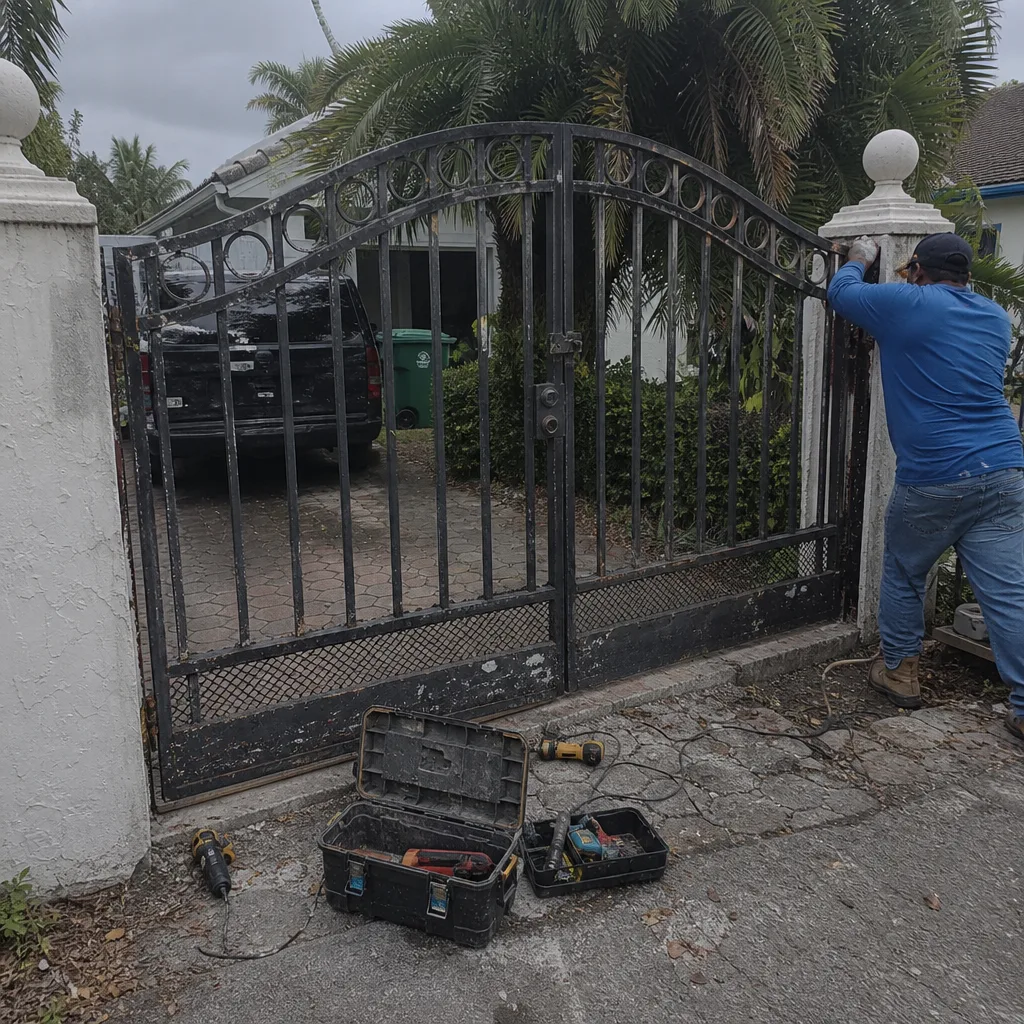 Before
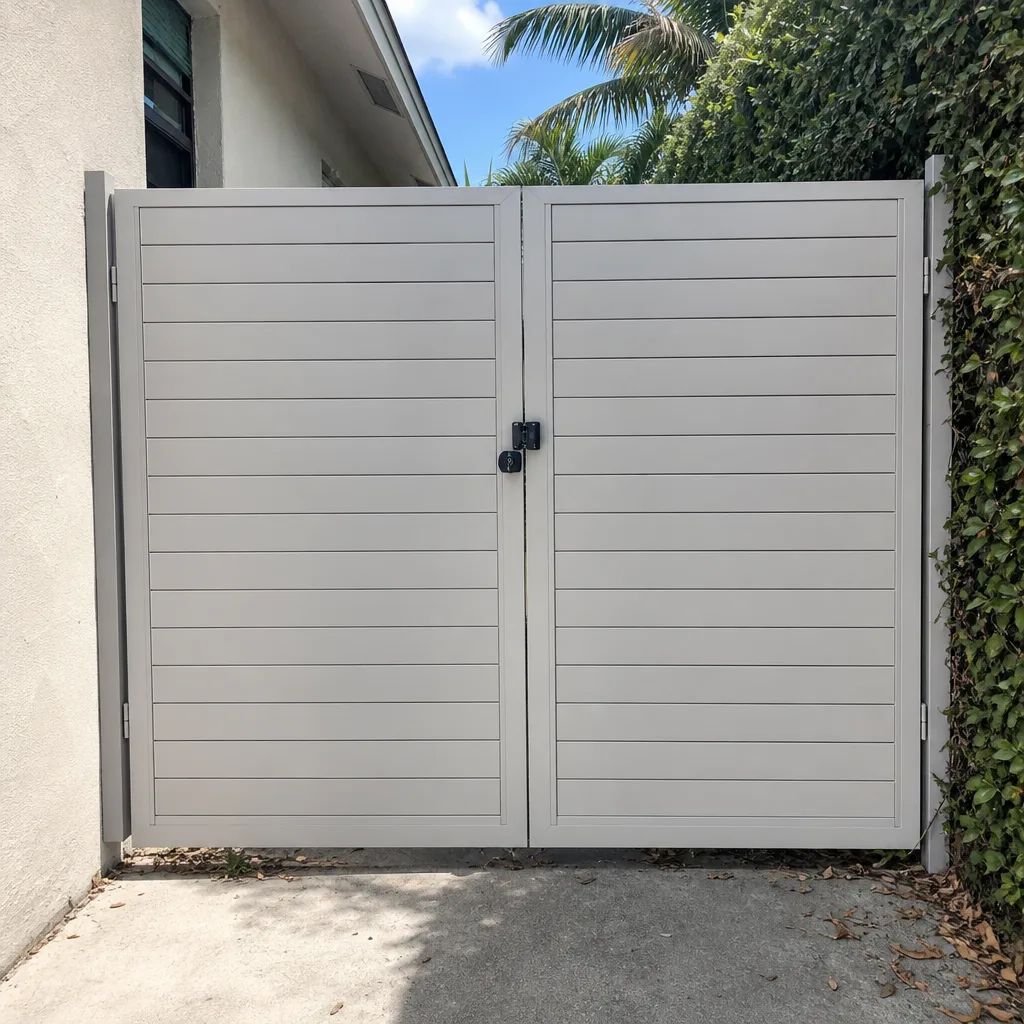 After
After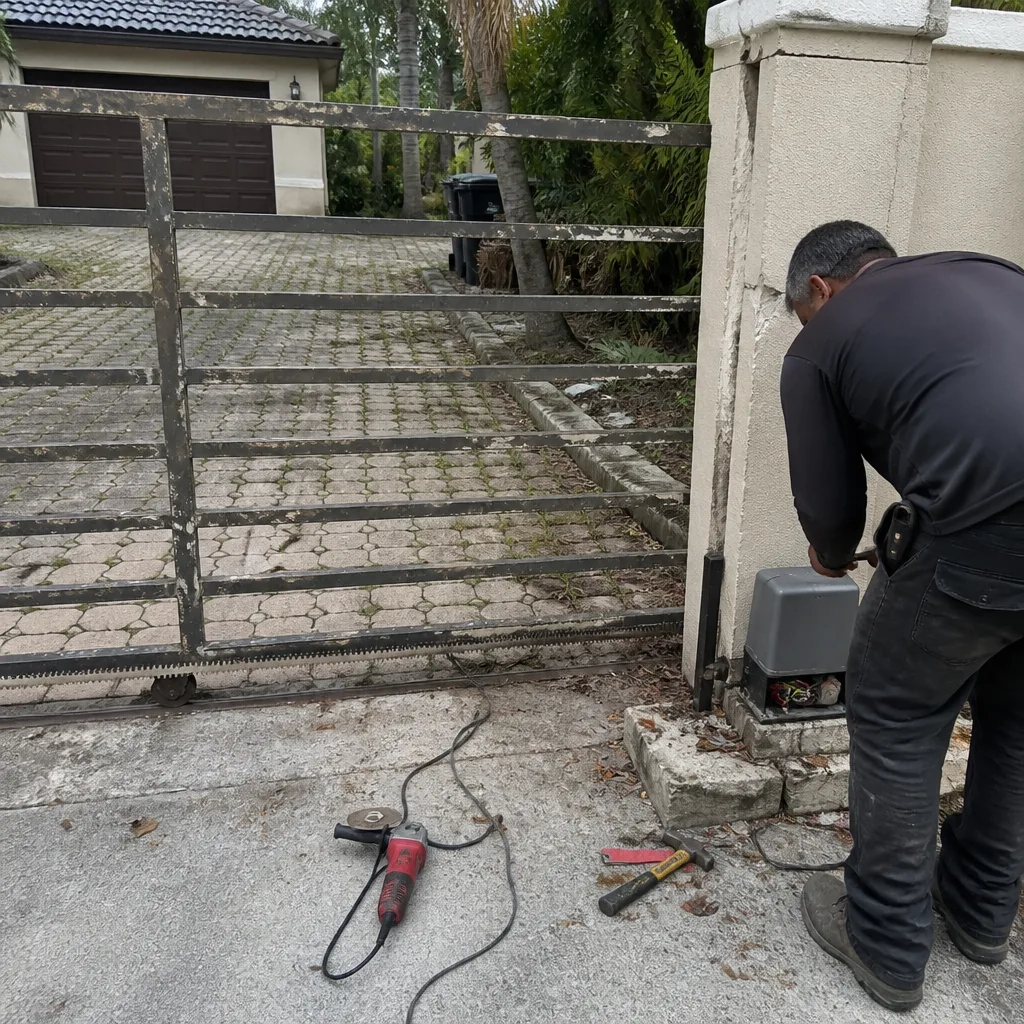 Before
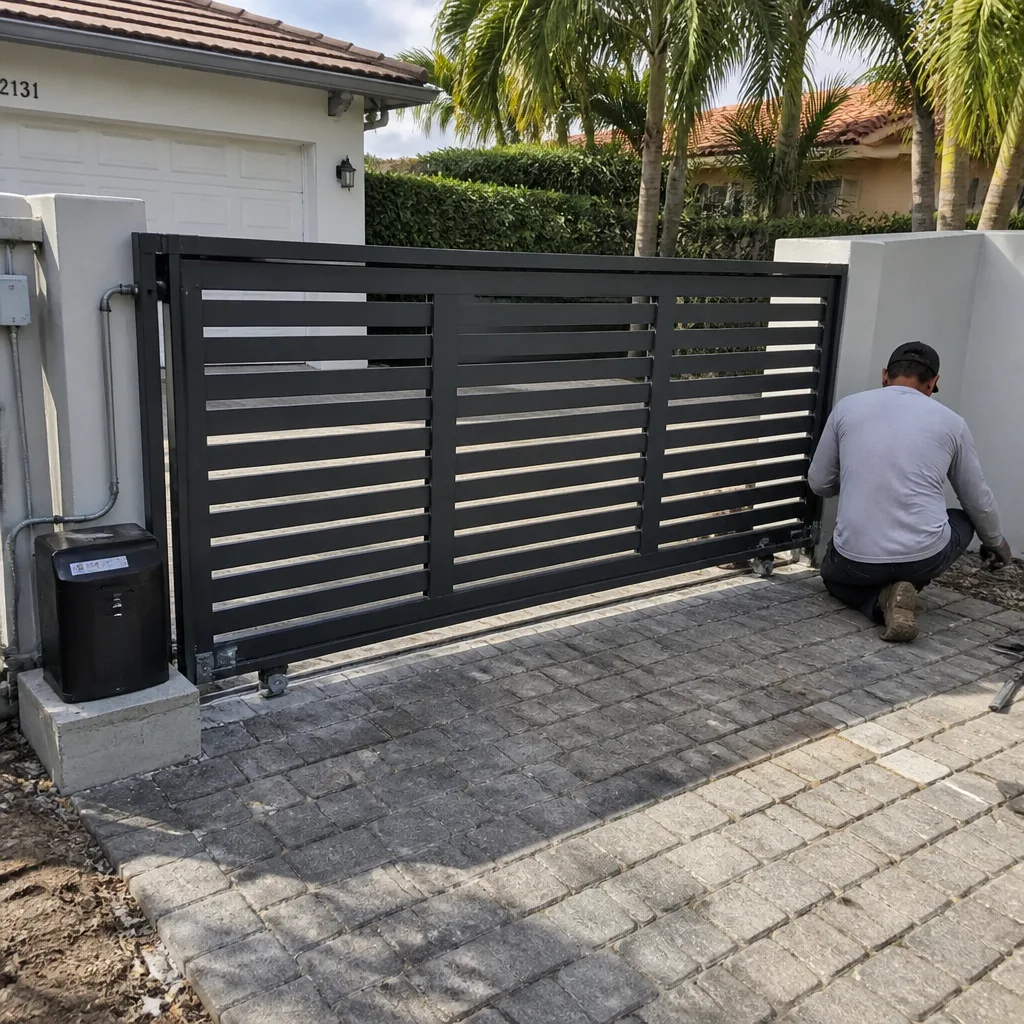 After
After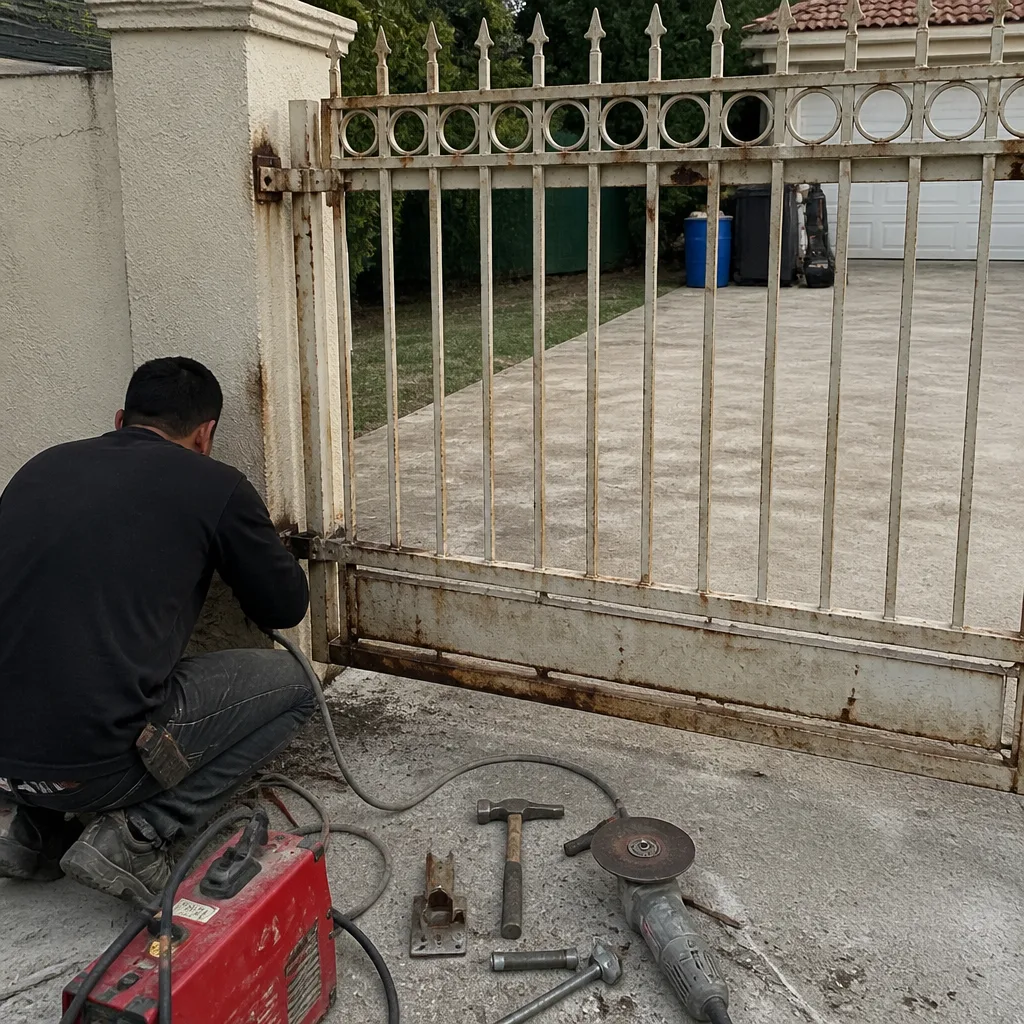 Before
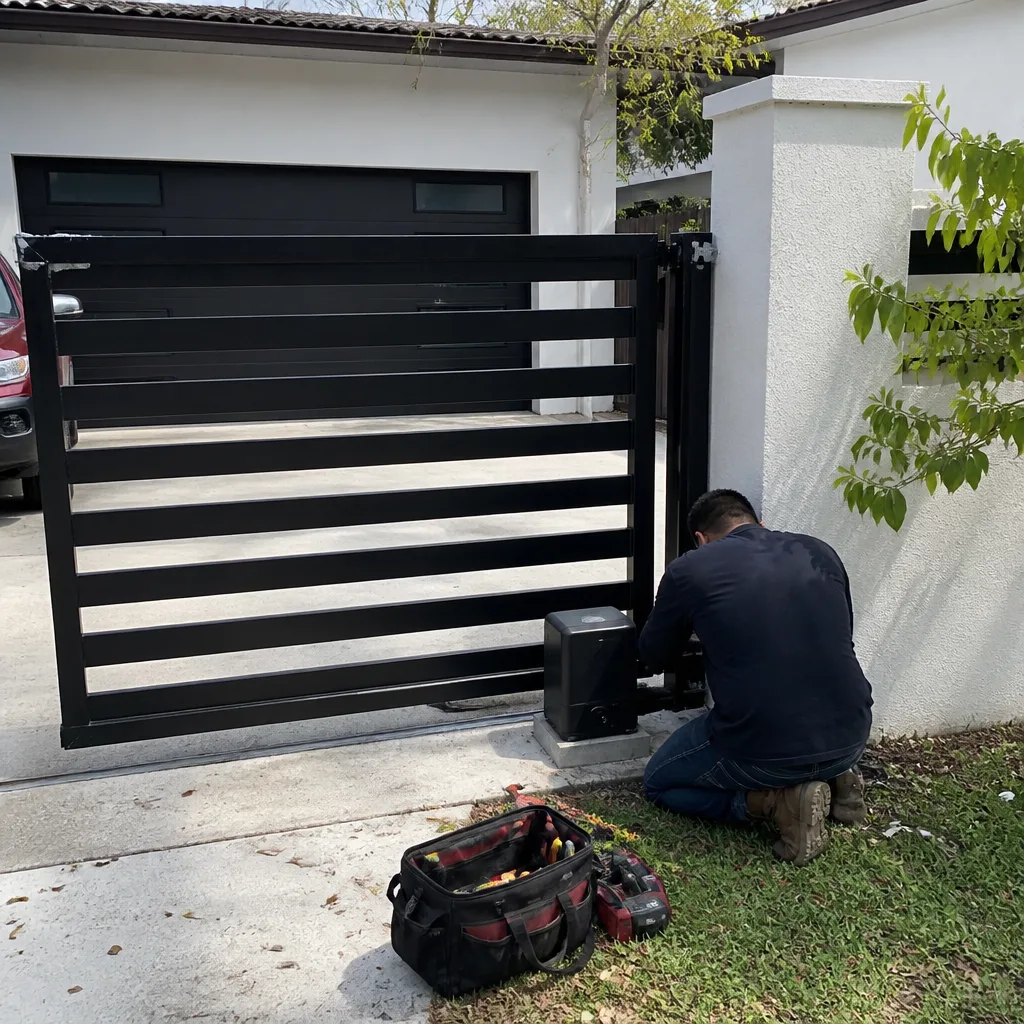 After
AfterFrequently Asked Questions
A basic gate tune-up in Miami typically runs $125 to $250, which includes lubrication, limit and force adjustment, photocell check, and hardware inspection. If the technician finds worn parts, replacement chain or belt runs another $80 to $200 depending on length and drive type. A full motor replacement is usually $500 to $900 installed for residential operators, which is why the $15 can of marine-grade lubricant applied twice a year is the best value in gate maintenance. Call (850) 409-8032 for an exact written estimate before any work starts.
An electric gate in Miami needs four things on a regular schedule: lubrication of the chain or belt with a marine-grade product, testing of the photocells and auto-reverse function, inspection of the posts and footings for movement, and documentation of everything with dated photos. On top of that, the operator’s gearbox and limit settings should be checked by a professional annually. The schedule changes by season – the heavy lubrication before rainy season, the electrical checks during dry season – but the four categories stay the same.
Yes, you can handle most routine gate maintenance yourself: lubricating the drive, checking the posts for lean, cleaning the photocell lenses, and testing the safety features. The tasks that should stay with a professional include any work inside the operator housing that involves the control board or force settings, any post or footing realignment, any electrical work at the breaker panel, and any repair that involves the high-tension springs or torsion bars – those components store dangerous energy. If you’re not sure which category a problem falls into, call (850) 409-8032 and we’ll tell you over the phone.
We recommend a full professional service visit once a year in Miami, scheduled in May before the rainy season peaks or in November after hurricane season ends. Between those visits, run your homeowner-level checks monthly during the June – October rainy period and every other month during the dry season. Gates within half a mile of salt water should be lubricated monthly.
After a Miami storm, the most common problems we see are water intrusion into the operator housing, photoelectric sensors knocked out of alignment by wind or debris, and gate posts that have shifted slightly in saturated soil. All three are easier and cheaper to fix in the first week after the storm than after a month of daily use has turned a small misalignment into a motor failure.
Yes. We service residential and commercial gate systems built on BFT, Linear, Viking, and Ghost Controls platforms, among others. Each operator brand has different limit settings, force adjustments, and diagnostic codes, so the person who shows up should know the brand before they arrive. When you call, tell us what operator is on the property and we’ll send a technician who knows how to work on it – not someone reading the manual for the first time in your driveway.
The Bottom Line
Miami’s gate maintenance calendar runs on two seasons: a hurricane season when you lubricate, drain, and test the safety features, and a dry season when you inspect electrical components, recalibrate the operator, and do the cosmetic sealing. The highest-value task is lubricating the chain or belt with a marine-grade product before rainy season – it’s the difference between a $15 maintenance cost and a $600 motor replacement. Photocell and auto-reverse testing are the safety checks that matter after any incident, and the paper trail of photos and receipts is what protects you with HOA and insurance. Most of this guide is doable in twenty minutes a month. The rest is what we’re here for.
Portcullis Gate Repair Miami
We’re an independently owned Kingswell company, and every gate repair or installation we do in Miami carries the Kingswell Guarantee: a written price before any work begins, a real arrival window, a clean job site, and a written guarantee on the repair. If the work fails within the 365 days covered by the Done Right Promise, we return and fix it at no charge. The price is written down before a single bolt is turned. When you call Portcullis Gate Repair Miami, a live person answers – around the clock, every day of the week – and the technician who arrives is background-checked, uniformed, and trained on your specific operator brand.
Written by Dean Prescott, Owner at Portcullis Gate Repair Miami, serving Miami since 2008.