
Last updated October 16, 2026
 Wrought iron
 Wood & steel frame
 Farm & ranch
 Sliding driveway gates
 LiftMaster operators
Free on-site gate assessment - hinges, posts, and your LiftMaster or Nice gate operator checked before anything is quoted
The assessment is free and the quote is the invoice.
Get your free estimateDIY vs Professional Gate Repair: The Miami Homeowner’s Decision Guide
Replacing a gate remote or adjusting a photocell is genuinely a five-minute DIY job. Replacing a gate motor yourself in Miami-Dade without a permit can void your homeowner’s insurance and show up as an open permit on your title search. That is not a skill problem, it is a legal one. This guide draws the line between the repairs you can safely do with a basic tool kit and the jobs where the smart money goes to a licensed pro. We will cover real Miami permit realities, the UL 325 entrapment standard, warranty traps, and how to calculate what a DIY attempt actually costs you.
Styles & brands we work with
Quick Answer
DIY gate repair in Miami makes sense for low-voltage, non-structural items: remotes, keypad batteries, photocell alignment, hinge lubrication, and limit-switch fine-tuning. Anything that touches the gate operator’s motor, capacitor, control board, or the gate’s physical structure and safety edges crosses into work that requires a licensed contractor under Florida law, carries entrapment risk under UL 325, or voids a manufacturer warranty. For those jobs, hiring a professional gate repair company in Miami is the legally and financially smarter move.
Table of Contents
- Repairs That Are Safe and Legal for Miami Homeowners to Do Themselves
- Repairs That Require a Licensed Contractor Under Florida Law
- The Entrapment Risk: Why UL 325 Is Not Bureaucracy
- How to Calculate the Real Cost of a DIY Gate Repair
- The Warranty Trap: When DIY Voids Your Operator’s Coverage
- What to Ask a Professional So You Learn While They Work
- Miami-Specific Gate Repair Realities: Salt, Storms, and Code
- Common Mistakes to Avoid
- When to Call a Professional
- Frequently Asked Questions
- The Bottom Line
Repairs That Are Safe and Legal for Miami Homeowners to Do Themselves
Some gate work is genuinely homeowner-grade. These jobs sit on the low-voltage or purely mechanical side of the fence, require no permit, and rarely involve serious injury risk. If you are comfortable with a multimeter, a socket set, and reading a manual, start here.
- Replacing remote controls and keypad batteries. Most remotes use A23 or CR2032 batteries. Pop the case, swap the battery, test. Five minutes including finding the screwdriver.
- Reprogramming remotes and keypads. Every major brand, including LiftMaster, Mighty Mule, FAAC, and BFT, publishes reprogramming sequences in the owner’s manual. If you have the manual or can find the PDF online, this is a ten-minute job with zero risk.
- Cleaning and realigning photocells. In Miami’s humidity, photo-eye lenses fog and collect salt film. Wipe them with a dry cloth and check the mounting bracket alignment. If the little indicator LED stays lit, you are aligned.
- Lubricating hinges, rollers, and the gate track. Use a white lithium grease or a silicone spray rated for outdoor metal. Do this every four to six months, more often if your gate faces Biscayne Bay and gets salt spray.
- Adjusting the auto-close timer. Many operators have a simple dial or DIP switch for the close delay. If your gate slams too fast or lingers open, adjusting this setting is safe and reversible.
- Replacing a gate wheel or roller. If your gate rides on a V-track wheel and the wheel has disintegrated, the swap is straightforward with basic tools. The gate should be blocked securely before you lift anything.
These fixes share one trait: they do not require opening the operator’s electrical enclosure or modifying the gate’s structure. If a repair takes you into the control board, the capacitor, the motor, or the mounting post, stop. That is the line.
Repairs That Require a Licensed Contractor Under Florida Law
Florida’s licensing rules for gate work are not gate-specific, they live under the electrical and general contractor statutes. Here is what that means for a Miami homeowner in plain terms.
Any repair that involves connecting, disconnecting, or modifying line-voltage wiring (120V or 240V) feeding the gate operator falls under Florida’s electrical contractor licensing requirements. That includes replacing a control board, swapping a capacitor, installing a new motor, or running a new power feed from your panel to the gate. Doing this work without a license is a second-degree misdemeanor under Florida Statute 489.127, and it can void your homeowner’s insurance coverage for any resulting fire or damage claim.
Structural modifications to a gate itself, like replacing a sagging gate leaf, resetting a fallen post, or converting a swing gate to a slide gate, fall under general contractor or specialty contractor rules depending on the scope. In Miami-Dade, the permitting process is stricter than in most of the country. Miami-Dade’s Building Department requires a permit for any gate post concrete work and for electrical changes to the operator circuit. If you sell the house with an unpermitted gate modification, title companies in Miami routinely flag open permit issues and insurance carriers have denied claims for unpermitted electrical work.
Here is the two-column version, stripped to the essentials.
Safe for a careful homeowner:
- Remote and keypad battery replacement
- Remote and keypad reprogramming
- Photocell cleaning and alignment
- Hinge, roller, and track lubrication
- Auto-close timer adjustment
- V-track wheel replacement
Requires a licensed contractor in Florida:
- Any repair inside the operator’s electrical enclosure
- Motor, capacitor, or control board replacement
- Line-voltage wiring, disconnects, or power supply work
- Safety edge, loop detector, or entrapment sensor replacement
- Gate post resetting or re-concreting
- Gate leaf structural repair or replacement
- Operator installation or full system replacement
This list is not a moral judgment on your abilities. It reflects Florida law, Miami-Dade code, and the reality of what a home insurer will ask if something goes wrong. If you want a deeper look at what full service includes, our Gate Repair in Miami page breaks down the scope of typical residential work.
The Entrapment Risk: Why UL 325 Is Not Bureaucracy
UL 325 is the UL standard for gate and door operators, and it exists because gates have killed people. Since 2000, the Consumer Product Safety Commission has tracked deaths and serious injuries involving automatic gates, many involving children. The standard mandates specific entrapment protection devices: photo-eyes, contact edges, or non-contact sensors that detect an obstruction and reverse the gate.
When a homeowner installs or repairs a gate operator without calibrating these safety devices correctly, the gate becomes a crushing hazard. A properly calibrated operator should reverse when it encounters roughly 40 pounds of resistance. An improperly calibrated one can push through that resistance and keep going. That is the difference between a dented bumper and an ambulance call.
Here is what a professional gate technician does that a DIY repair usually skips:
- Entrapment device verification. The tech tests every photo-eye and safety edge by blocking the gate path and confirming the operator reverses within the required time and force range.
- Force-limit calibration on both open and close cycles. UL 325 requires the operator to reverse or stop when it meets resistance in either direction. This is measured with a force gauge, not by feel.
- Warning signage placement. UL 325 requires specific warning signs on both sides of the gate. Missed signs are a common code violation in Miami.
- Secondary entrapment protection confirmation. Many operators include an audible alarm or a secondary sensor that activates if the primary photo-eye is blocked or damaged. A pro verifies it works.
In our experience, this is the most commonly skipped step in DIY gate operator work. The gate opens and closes, so the job looks done. The safety system is only half wired or never calibrated, and the homeowner has no idea until something or someone is in the path. That is not a repair that failed, that is a repair that was never finished. When we handle electric gate repair in Miami, the UL 325 calibration is non-negotiable on every single job.
How to Calculate the Real Cost of a DIY Gate Repair
The sticker price of DIY is always lower than a service call. The full cost is usually higher. Here is an honest accounting method, the same one we walk Miami homeowners through when they are deciding between fixing something themselves and hiring it out.
Step 1: Add up the parts, not just the main part. A replacement Mighty Mule control board might cost $180 to $250 online. You will also need a capacitor that sometimes fails alongside it, replacement spade connectors, heat-shrink tubing rated for outdoor Miami humidity, and a new weather seal for the enclosure. Realistic parts total: $260 to $340.
Step 2: Add tool rental or purchase. If the repair requires a force gauge for UL 325 calibration, that is a specialized tool most homeowners do not own. A functional force gauge starts around $120 to $200. If the job requires lifting a gate leaf, you need a chain hoist or a floor jack plus blocking stands. Add $40 to $80 in rental or $100 to $250 in purchase.
Step 3: Value your time honestly. A first-time control board replacement takes most homeowners four to eight hours including YouTube research, mistake correction, and reassembly. If your time is worth $40 an hour, that is $160 to $320. If the gate is your only access and your car is trapped inside, the value of a working gate today is higher than the hourly math suggests.
Step 4: Add the second-call risk. This is the line most DIY cost estimates skip. Roughly one in three DIY gate repairs in our experience ends with a service call to finish or redo the work, and that call costs more than it would have originally because the tech must first diagnose and undo whatever was done wrong. Budget 30% to 100% of the original DIY savings for that possibility.
Run the numbers. A $300 parts-and-tools job at six hours of your time, with a 30% second-call risk, often lands within $50 to $150 of a professional repair quote. That gap closes further when the professional quote includes a written guarantee that the repair will last, and a free return visit if it does not.
For context on typical professional pricing in this market, most swing-gate actuator replacements in Miami run $1,200 to $2,400 parts and labor depending on brand and access. A full operator replacement, including the motor, control board, safety devices, and labor, typically runs $1,800 to $3,800. A service call to diagnose and repair a non-functioning gate usually costs $95 to $250 including the first hour. When you compare DIY against those numbers with the hidden costs included, the decision changes shape.
The Warranty Trap: When DIY Voids Your Operator’s Coverage
Here is the scenario nobody tells you about before you open the control box. Your gate operator is two years old, still inside its factory warranty period, and it stops working. You open the enclosure, trace the power wires, replace a capacitor, and the gate works again. Six months later the motor fails. You file a warranty claim, and the manufacturer denies it because the unit was opened and repaired by an unauthorized person.
Every major gate operator manufacturer includes a clause in its warranty terms voiding coverage when unauthorized repair work is performed on the unit. This includes LiftMaster, FAAC, BFT, and Mighty Mule. Some are stricter than others, but the pattern is consistent: opening the motor housing or control board enclosure and replacing internal components gives the manufacturer a no-fault denial.
Before you touch any internal component, do this:
- Find your operator’s model number. It is on a sticker on the side or inside the operator enclosure.
- Check the warranty window. Most residential operators carry one to five years of coverage on motors and one to two years on control boards. The paperwork or the manufacturer’s website will confirm.
- Look for the authorized-service clause. The warranty text will state whether repair must be performed by a certified or authorized technician.
- Call the manufacturer’s support line. Before opening anything, ask if your planned repair voids coverage. Get the answer in writing or at least note the rep’s name and the date.
If the operator is out of warranty, the calculus changes. Then DIY becomes a pure cost-and-risk decision with no warranty downside. But inside the warranty period, a $200 DIY fix can cost you a $700 motor replacement that would have been covered. That is not a good trade. If you are unsure of your operator’s warranty status, a quick call to a professional who services the major brands can clarify it before you make an expensive mistake. We work across nine operator brands, including the four mentioned above, so this is a question we answer daily for Miami homeowners.
What to Ask a Professional So You Learn While They Work
A good gate repair visit doubles as a training session if you know what to ask. Here are the questions that turn a one-time fix into long-term knowledge, the kind that helps you maintain your gate between service calls and diagnose small problems early.
- “Can you show me where the manual release is and how to operate it?” If the power fails during a Miami storm, you need to know how to open the gate by hand so your car is not trapped. This takes two minutes to learn.
- “What needs lubrication, and how often?” Different gates need different products. A slide gate in Coral Gables needs different lubrication than a swing gate in Kendall. Ask for a specific product recommendation and a schedule.
- “Which parts are likely to fail next, and what do they cost?” A good technician can look at a gate and tell you the capacitor is showing age, or the hinge bushings are worn, or the battery backup is near end of life. That gives you a repair budget for the next 12 months.
- “How do I test the safety reversal myself?” You can and should test your gate’s auto-reverse by placing a rolled-up garden hose or a trash can in the path and confirming the gate reverses on contact. Ask the tech to show you what correct behavior looks like.
- “What is covered under your guarantee, and what is not?” Get the answer in writing. The Kingswell Guarantee covers every repair we perform for 365 days, written on the invoice, with a free return visit if the repair fails inside that window. Ask any company you hire to be equally specific.
These questions do two things. They give you practical maintenance knowledge, and they tell you how the technician responds when asked to explain something. A pro who answers plainly and shows you the components is worth keeping.
Miami-Specific Gate Repair Realities: Salt, Storms, and Code
Gate repair in Miami is not the same as gate repair in Orlando or Tampa. The local environment and regulatory landscape change both the failure patterns and the repair requirements.
Salt air accelerates electrical failures. Properties within a few miles of Biscayne Bay or the Atlantic deal with constant salt aerosol. We regularly see control boards and terminal strips corroded inside supposedly sealed enclosures in neighborhoods like Coconut Grove, Key Biscayne, and Miami Beach. The fix is often not just cleaning the board, it is adding a proper weather seal and relocating the enclosure if it is mounted in a salt-exposed position. A DIY board swap that does not address the seal just fails again in twelve months.
Hurricane season changes the prep calculus. From June through November, a non-functioning gate is not just an inconvenience, it is a security and access problem during evacuation windows. Miami-Dade code requires that automatic gates have a manual release and that the gate can be secured open for storm events when power is expected to fail. If your manual release is seized or missing, that is a code violation and a practical problem the next time a named storm heads our way.
Miami-Dade permitting is stricter than the rest of Florida. The county requires permits for gate electrical work and for structural gate modifications, and the county’s permit search is public. Unpermitted work can surface on a title search during sale. If you are buying or selling a home in Miami, open gate permits are a real transactional issue. Before any major gate project, confirm with the contractor whether a permit is required and who pulls it. For more guides & resources on navigating Miami-Dade’s gate repair rules, explore our blog. A professional gate repair company that does this work in Miami should know the answer without hesitation.
Concrete and soil movement affect gate geometry. Miami’s soil, especially in areas with high water tables or fill, shifts over time. A gate that worked perfectly for five years starts dragging or failing to latch because the post has settled. This is a structural repair, often requiring post resetting and re-concreting, not a hinge adjustment. DIY attempts to bend or shim the gate usually make the problem worse.
When we do gate installation in Miami, the quote always accounts for the local soil, salt exposure, and storm code requirements. It is a different job here than anywhere else in Florida, and the pricing reflects that.
Common Mistakes to Avoid
- Opening the operator enclosure to “take a look” while the gate is still under warranty. Even exploratory disassembly can void coverage depending on the manufacturer’s terms. Check the warranty status before you touch a screw.
- Replacing a motor or control board without checking for a Miami-Dade permit requirement. Unpermitted electrical gate work is a legal violation and can block a future home sale. The title search in Miami-Dade is thorough.
- Ignoring the safety reversal after a DIY repair. If you replace any operator component and do not re-test the auto-reverse with a physical obstruction, you have left a crushing hazard on your property. Test it every time.
- Using the wrong lubricant on hinges and rollers. WD-40 is a solvent, not a long-term lubricant. It strips away protective coating and leaves metal dry. Use white lithium grease or a dedicated gate lubricant.
- Buying generic replacement parts that do not match the operator. A cheap aftermarket control board for a FAAC or BFT unit may power the gate but bypass safety features. Stick with OEM or manufacturer-approved parts.
- Setting the gate force too high to “fix” a binding gate. If your gate needs extra force to close, the real problem is usually hinge wear, track misalignment, or a failing roller. Cranking the force limit overrides the safety reversal and creates the exact entrapment risk UL 325 is designed to prevent.
- Forgetting the manual release. If you cannot open your gate by hand during a power outage, you have a problem. Test the manual release before hurricane season, not during it.
When to Call a Professional
Call a professional gate repair company in Miami when the repair involves line-voltage wiring, any component inside the operator enclosure, any safety device calibration, or any structural work on the gate or posts. Call when the gate is still under warranty and you want the coverage intact. Call when you have already attempted a DIY fix and the gate is worse than when you started. Portcullis Gate Repair Miami offers free estimates in Miami for all repair and installation work. Call (850) 409-8032 and a live person answers, any hour of any day.
Frequently Asked Questions
Most professional gate repairs in Miami run between $95 and $1,500 depending on the component and the scope. A diagnostic service call typically costs $95 to $250 including the first hour. Swing-gate actuator replacements typically run $1,200 to $2,400 parts and labor. A full operator replacement runs $1,800 to $3,800. Every Portcullis job includes a written price before any work starts, so the number you agree to is the number you pay. Call (850) 409-8032 for an exact quote, the estimate is free.
It is legal to do low-voltage, non-structural work like replacing remotes, batteries, and photocells on your own gate in Florida. It is not legal under Florida Statute 489.127 to perform line-voltage electrical work on a gate operator without an electrical contractor license, and in Miami-Dade that work also triggers permit requirements. Structural gate modifications carry their own permitting rules.
Many gate repairs can be diagnosed and completed the same day when parts are on the truck or available locally. Complex operator replacements may take longer if a specific control board or motor must be ordered. Portcullis gives you a real arrival window when you book, not a four-hour wide-open sweep, and the written quote covers the full scope before the work starts.
UL 325 is the safety standard for automatic gate operators that mandates entrapment protection devices and specific force-reversal limits. It exists to prevent gate crush injuries and deaths, which is why proper calibration after any operator repair is not optional. A professional gate technician tests the auto-reverse and photoelectric sensors on every repair as part of the job.
A DIY gate repair itself does not automatically void your insurance, but a fire or injury claim caused by unpermitted, unlicensed electrical work on your gate can be denied. Insurers ask who did the work and whether it met code. Unpermitted gate work in Miami-Dade is a common reason claims are denied and home sales are delayed.
We provide certified service experience across nine major gate-operator brands: LiftMaster, FAAC, BFT, Linear, Viking, Ghost Controls, DoorKing, Elite, and Mighty Mule. If your gate runs on one of these systems, the technician arriving at your door already knows the specific operator on your property. If your brand is not listed, call (850) 409-8032 and we will tell you plainly whether we can help.
The Bottom Line
The DIY-versus-professional question for gate repair in Miami comes down to three tests. Does the repair involve line-voltage electrical work or structural changes? If yes, call a licensed pro. Is the gate operator still under warranty? If yes, DIY voiding is a real risk, check first. Does the job involve safety-device calibration after a component swap? If yes, the UL 325 entrapment risk is not worth the savings. For remotes, batteries, lubrication, and photocell alignment, DIY is fine. For everything inside the enclosure or under the gate, call a professional who backs the work in writing. Portcullis Gate Repair Miami has served Miami since 2008 with a written price before any work and a written guarantee on every repair. See our Portcullis Gate Repair Miami home page or call (850) 409-8032 for a free estimate.
Written by Dean Prescott, Owner at Portcullis Gate Repair Miami, serving Miami since 2008.
See the difference
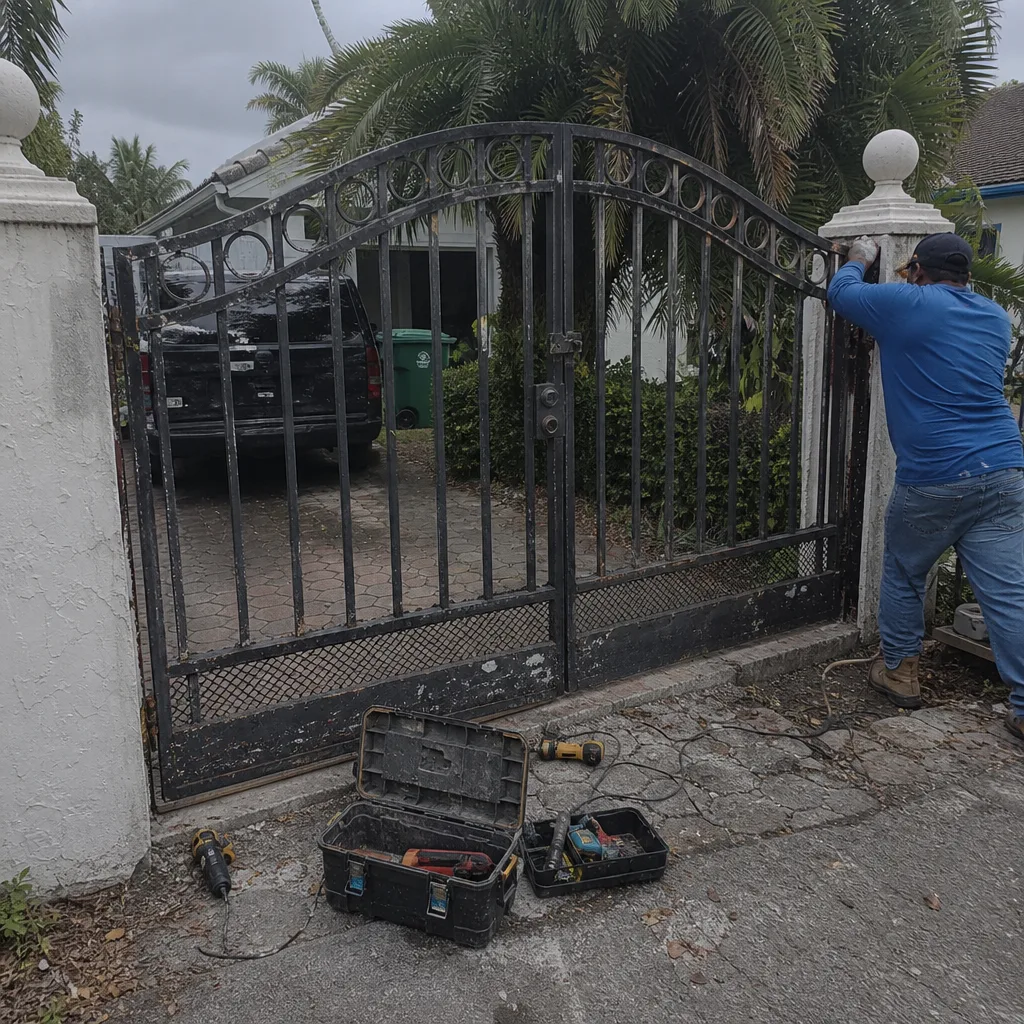 Before
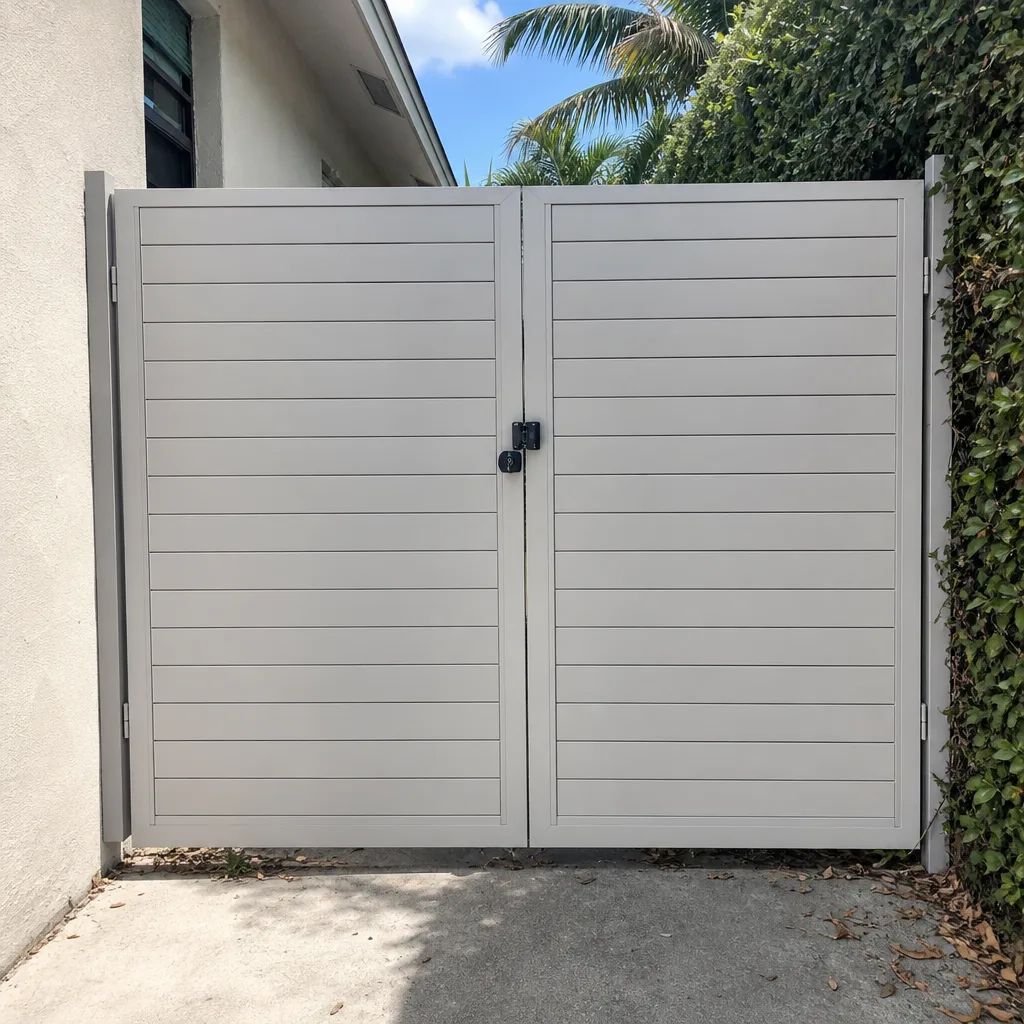 After
After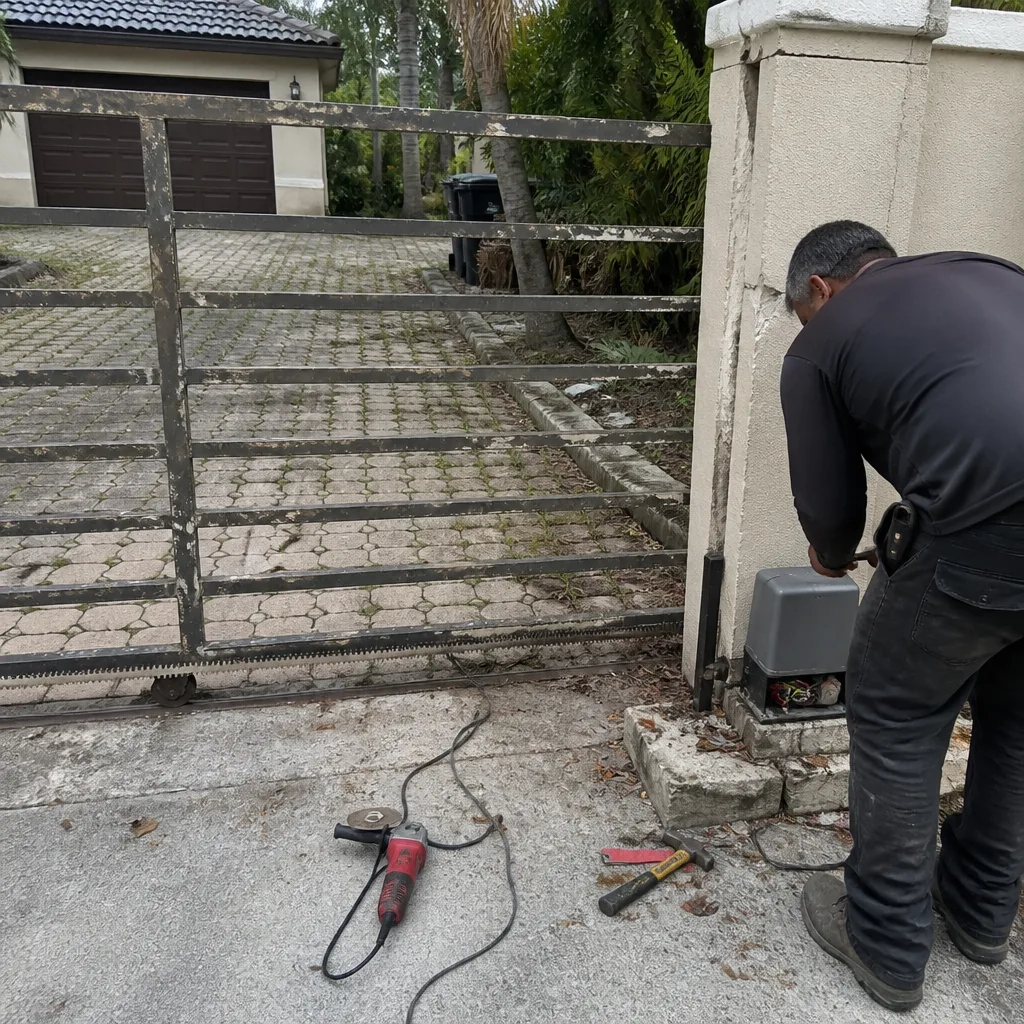 Before
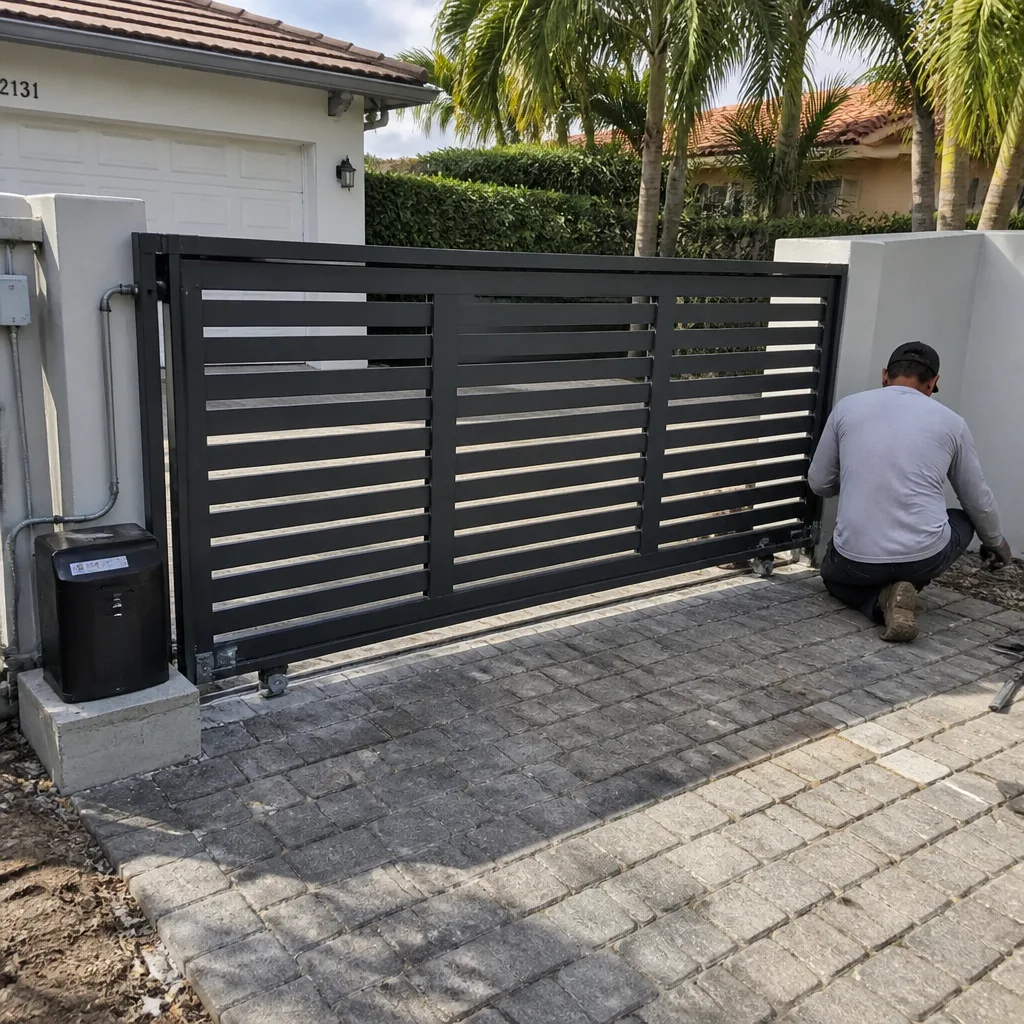 After
After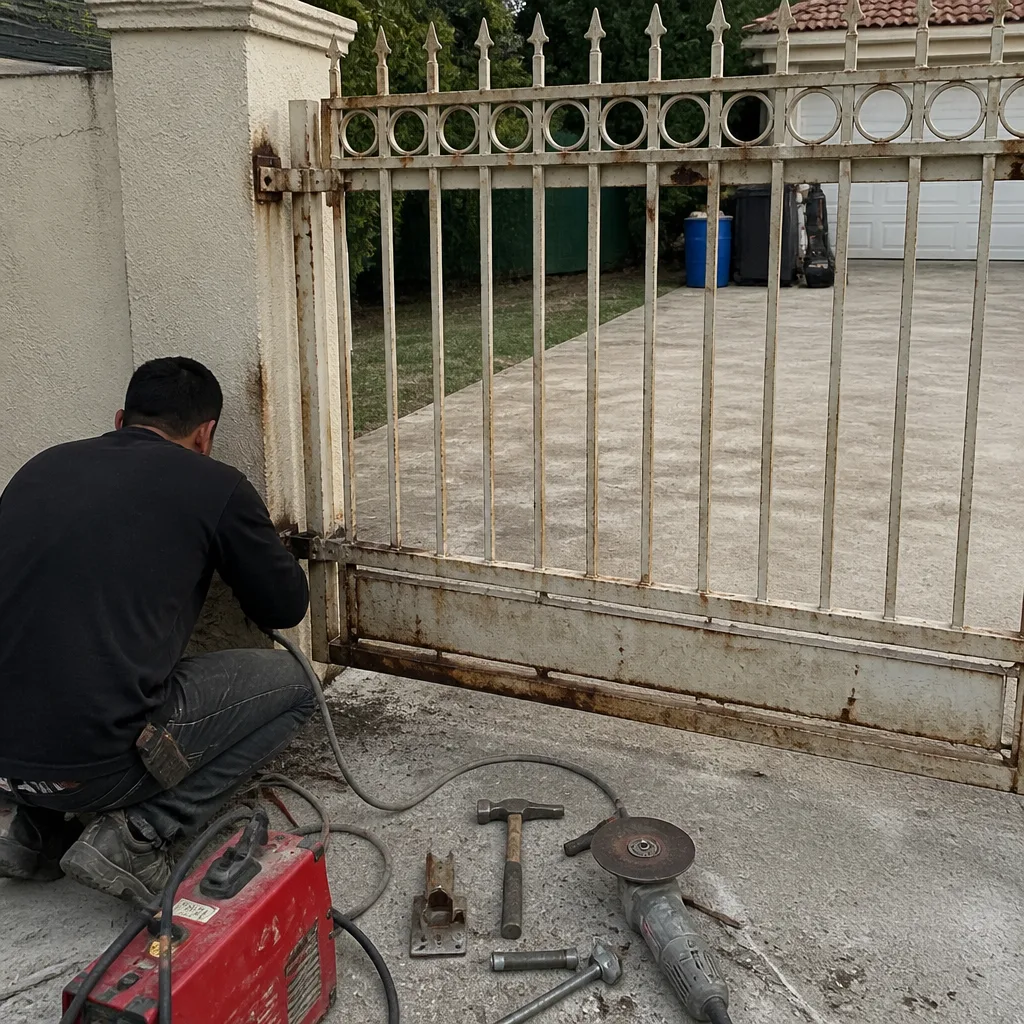 Before
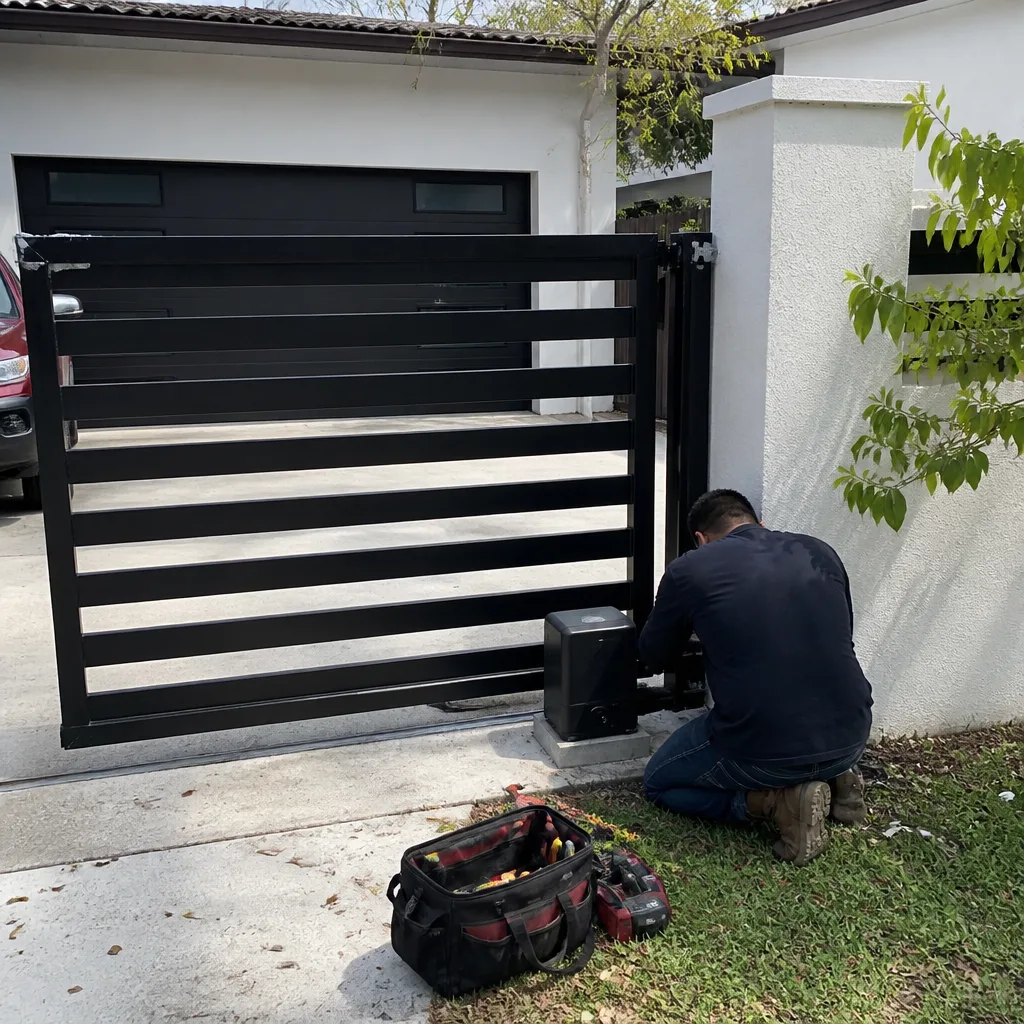 After
After