
Last updated October 16, 2026
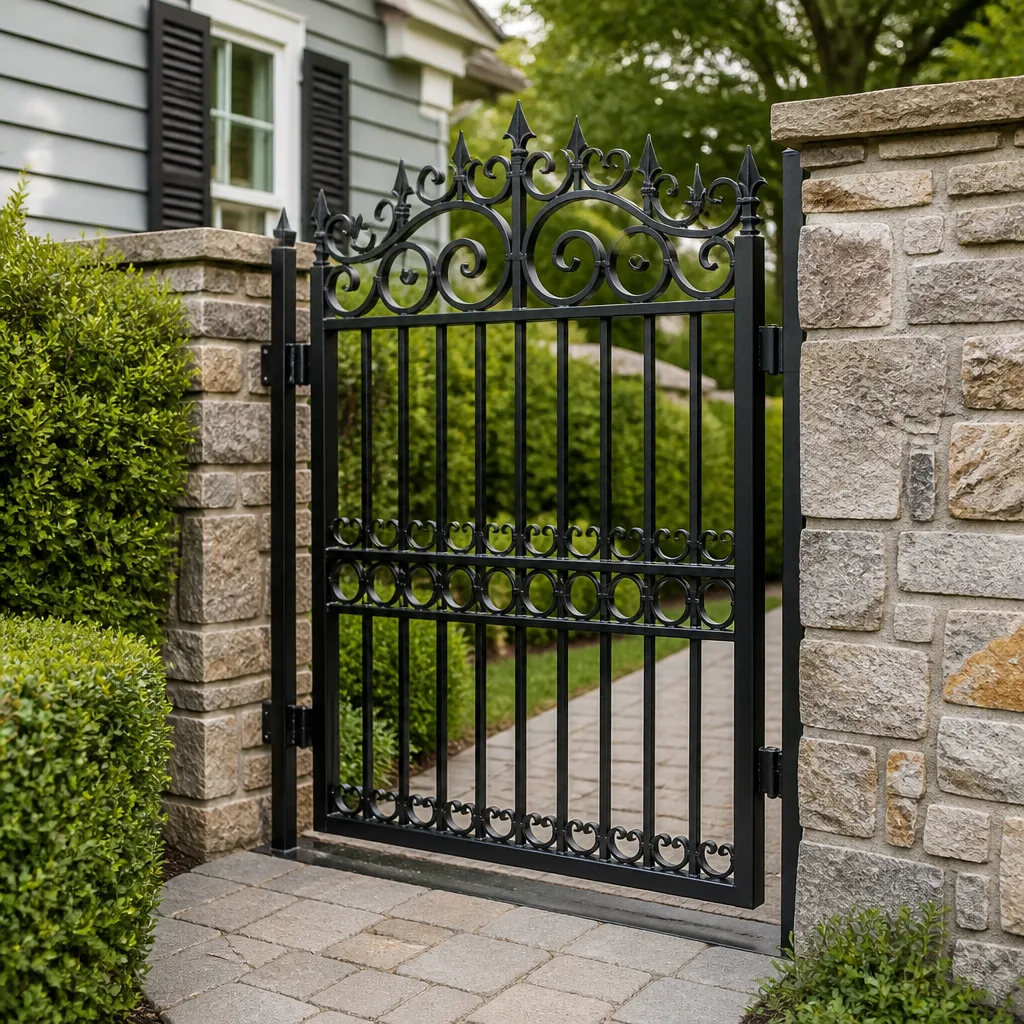 Wrought iron
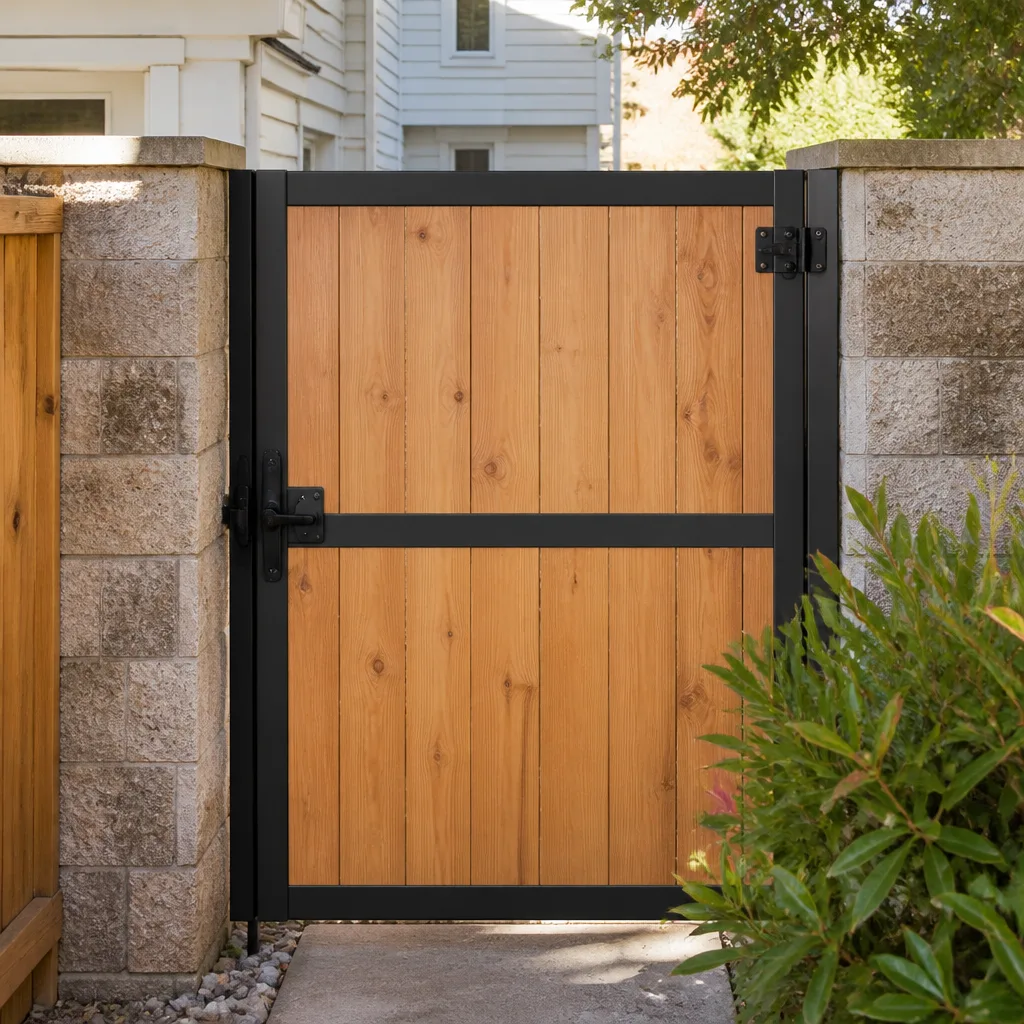 Wood & steel frame
 Farm & ranch
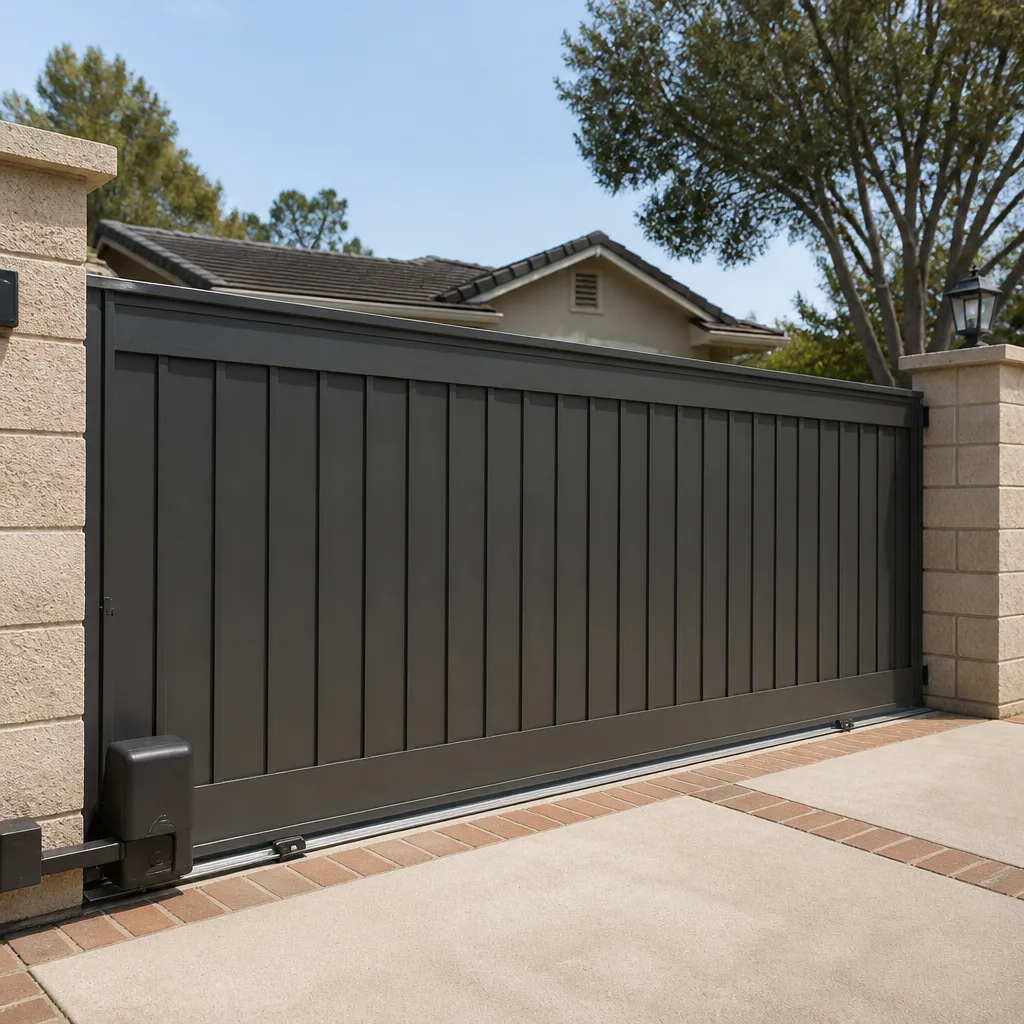 Sliding driveway gates
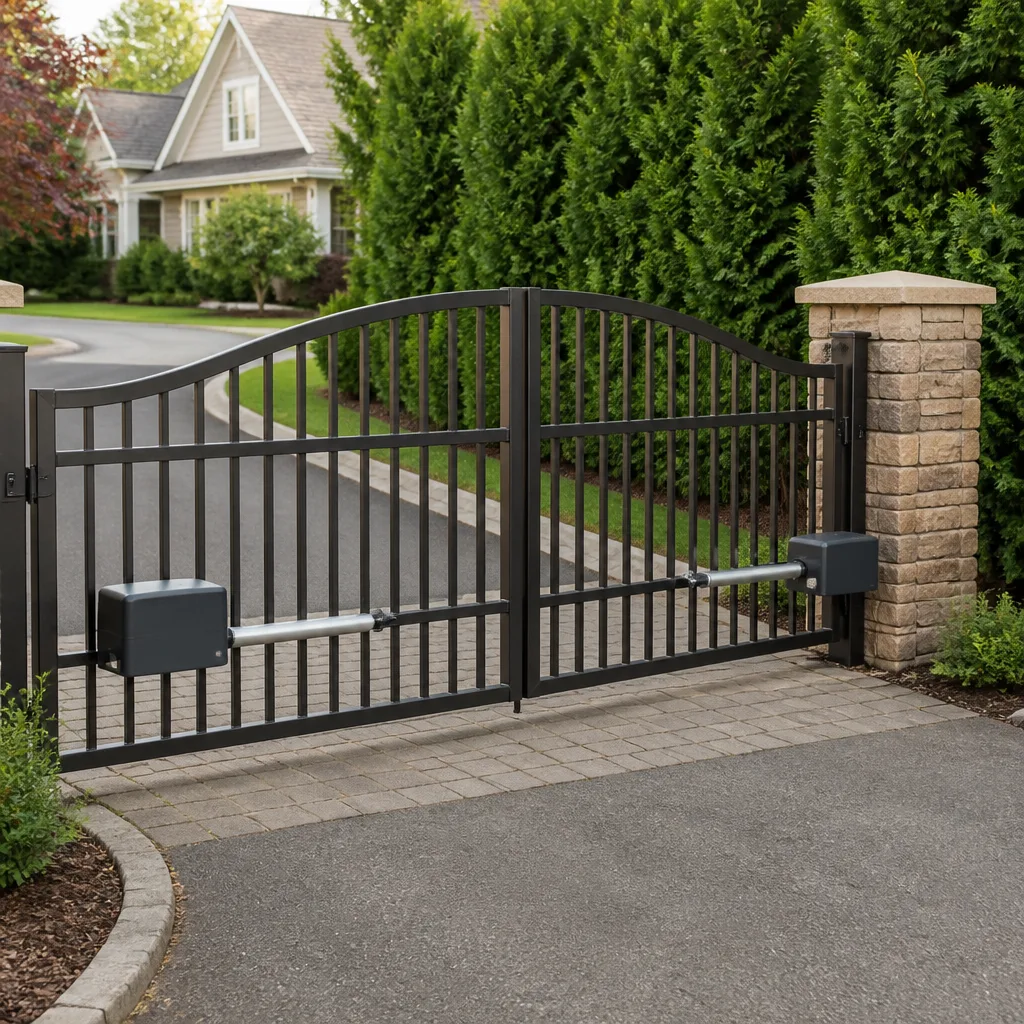 LiftMaster operators
Free on-site gate assessment - hinges, posts, and your LiftMaster or Nice gate operator checked before anything is quoted
The assessment is free and the quote is the invoice.
Get your free estimateSeasonal Gate Repair Care for Miami: Year-Round Homeowner’s Guide
Most homeowners assume August through October is when gate repair calls spike in Miami. It isn’t. The call volume at our shop and at nearly every other gate company in South Florida peaks in November, fourteen to twenty days after the last serious storm has passed. That’s the month when a gate that “kind of sounded rough” in September finally stops mid-swing, a hinge that was quietly corroding since July tears loose, and a control board that took on moisture during a tropical depression shorts out for good. This guide explains the two seasons that actually matter for gate hardware in Miami – the wet, storm-driven hurricane season and the dry, UV-heavy winter – and what you can do in each of them so you’re not part of that November surge. You’ll learn the specific hardware checks that prevent most failures, how to set your gate operator to manual mode before a named storm, what to inspect after the rain passes, and how to document all of it in writing so a manufacturer warranty claim survives the “lack of maintenance” denial.
Quick Answer
Seasonal gate care in Miami means treating the year as two seasons, not four: a wet season (roughly May through mid-November) that corrodes hardware, floods control boards, and stresses the operator through repeated storm-driven power anomalies, and a dry season (December through April) where UV radiation bakes lubricant out of hinges and deteriorates clear coats and powder coating. A homeowner should perform a pre-storm hardware check in April or early May, set the gate to manual operation during any named storm, complete a specific post-storm inspection after heavy rain, and then in the dry season touch up corrosion and re-lubricate all mechanical pivot points. Most seasonal gate failures are entirely preventable with about two hours of attention per year.
Styles & brands we work with
Table of Contents
- Miami’s Two Seasons: Why a Four-Season Gate Care Plan Fails Here
- Pre-Hurricane Season Prep: April through May
- During a Named Storm: Manual Mode and Power Protocols
- Post-Storm Inspection: What to Check After Heavy Rain
- Dry-Season Care: December through March
- Documenting Gate Care in Writing: The Warranty Protection Play
- Common Mistakes to Avoid
- When to Call a Professional
- Frequently Asked Questions
Miami’s Two Seasons: Why a Four-Season Gate Care Plan Fails Here
Most national gate maintenance guides are written for regions with a real winter. They’ll tell you to winterize hinges in October and check for freeze damage in February. That advice is useless in Miami-Dade County, where the average January low sits near 60°F and the asphalt on the Palmetto Expressway can hit 145°F on a July afternoon. Miami has two recurring stresses on gate hardware, and they alternate with almost clocklike regularity.
The wet season runs from late May through mid-November. Humidity consistently sits at or above 80 percent, daily thunderstorms are common even when there’s no named system in the Gulf, and the salt content in the air near the coast – from Coconut Grove up through Aventura and down through Palmetto Bay – accelerates oxidation on steel components at roughly twice the rate seen in inland communities like Westchester or Hialeah. This is the season of corrosion, moisture intrusion, and electrical failures.
The dry season runs from December through April. Rainfall drops sharply, but that’s also when Miami sees its longest stretches of cloudless sky and an average UV index between 6 and 9. That radiation breaks down polymer coatings on gate arms, fades powder-coat finishes faster than nearly anywhere in the continental United States, and essentially cooks grease out of hinge barrels. By March, we regularly see gates whose hinges have gone dry enough to squeal, and whose clear-coated aluminum panels are showing white oxidation streaks.
The two stresses interact. A hinge that ran dry through the dry season has microscopic scoring on its bearing surface. When the wet season arrives, moisture works into those scores and corrosion begins. A control board that sat through seven months of wet-season condensation cycles, followed by three months of dry-season heat, is far more likely to fail than one in a climate with less extreme swings. Understanding this two-season cycle is the foundation of everything else in this guide. For a deeper look at the mechanical systems themselves, see our page on Gate Repair in Miami.
Pre-Hurricane Season Prep: April through May
The single most important maintenance window in Miami is the six weeks from early April through mid-May, before the first named storm of the season appears in the Atlantic. If you perform this pre-season check and address what you find, you’ll eliminate the majority of gate failures that hit Miami homeowners later in the year. Here is the sequence, in order of importance.
Step 1: Check every hinge bolt and post anchor
Gate hinges and their mounting bolts carry the entire weight of the leaf through every open-close cycle, and in a tropical-storm wind event, that load spikes dramatically. Walk to each hinge on your gate and check three things: Is the bolt head rusted? Is the bolt still torqued tight, or can you feel movement when you lift the gate leaf an inch by hand? Is there a rust-colored drip streak running down from the hinge area? That streak is the tell-tale sign that water has been sitting inside the hinge barrel. A gate that’s loose on its hinges this month is a gate that tears itself off its post in September.
Step 2: Test the operator’s battery backup
Most residential gate operators in Miami are installed with a 12-volt backup battery – the black brick inside the operator box – that’s designed to keep the gate working for a few cycles if line voltage drops. These batteries typically last 3 to 5 years in Miami’s heat, not the 5 to 7 years the manufacturer claims, because sustained high temperatures shorten their cycle life. To test it: locate the operator’s circuit breaker or disconnect switch, shut off power to the operator, and cycle the gate once or twice using the remote or keypad. If the gate struggles, moves slower than usual, or doesn’t move at all, the backup battery has failed. Replace it now, not during a storm. Portcullis Gate Repair Miami keeps these batteries stocked for every major operator brand, including BFT and Linear systems.
Step 3: Inspect the operator housing for water entry paths
The operator box is the metal or plastic enclosure that houses the motor, the main control board, and the transformer. In Miami, these boxes take on water not through dramatic flooding but through a collection of smaller entry points: a dried-out gasket, a missing knock-out plug, a cracked conduit fitting, or a UV-brittled wire seal. Open the operator lid (with power off, please) and look for any signs of past water: white chalky residue on the control board, rust at the bottom edge of the enclosure, or wet leaves that have been pulled inside. If you see any moisture evidence, the board is running on borrowed time. Our Electric Gate Repair in Miami page explains what a moisture-compromised board failure looks like in practice.
Step 4: Lubricate every pivot point
The hinges on the gate leaf, the pivot pin where the actuator or arm attaches to the gate, the wheel assembly on a cantilever or sliding gate – every rotating metal-on-metal point needs lubrication at least once before wet season. Use a heavy, non-fling synthetic grease or a dry-film lubricant, not WD-40, which is a solvent and will strip the existing grease out. In Miami’s coastal areas, we also recommend marine-grade grease, which resists salt washout. Apply the lubricant, cycle the gate several times, and wipe away any excess that squeezes out. What you’re doing is filling the bearing gap so salt-driven moisture can’t.
During a Named Storm: Manual Mode and Power Protocols
When the National Hurricane Center issues a watch for Miami-Dade County, the single most protective thing you can do for your gate is to switch the operator system into manual mode and leave it there until the storm passes and you’ve completed your post-storm inspection. Setting a gate to manual means disengaging the operator’s drive mechanism from the gate itself, usually by pulling a release handle, so the gate swings or slides freely by hand instead of under motor power. There are three reasons this matters.
First, wind loading. A powered gate that is mid-cycle and gets hit by a tropical-storm gust experiences lateral forces it was never engineered for. The operator’s internal gearing absorbs that load, and when it exceeds the gear rating, teeth strip. A stripped drive gear is a $300 to $900 repair on most swing-arm actuators. The gate doesn’t care if it’s locked in manual mode; it swings with the wind and the wind distributes its force instead of concentrating it in the gearbox.
Second, power flickers. During Miami hurricanes, line voltage doesn’t fail cleanly. It flickers, browns out, spikes, and restarts over and over. Each power interruption while an operator is attempting to run can corrupt the control board’s limit settings, or worse, fry the main board entirely. The same repair is covered in depth on our Electric Gate Repair in Miami page, and it’s the most common post-storm electrical failure we see in Miami.
Third, if the power goes out for an extended period and the battery backup eventually drains while the gate is still in normal mode, most operators will not re-learn their limit positions automatically when power returns. The gate is then dead until a technician resets it. Manual mode avoids this entirely.
Here’s how to engage manual mode on the three most common operator brands in Miami:
- BFT operators: Open the operator cover. You’ll find a release handle or keyed lever on the side of the motor housing. Turn the handle counterclockwise or pull the lever outward until you hear a distinct click. The gate is now free.
- Linear operators: Most Linear swing-arm and slide operators use a red release knob or handle located on the bottom of the operator enclosure. Pull it firmly straight down and hold for a second. You may need to release a small detent pin first.
- Viking operators: Viking slide and swing operators usually have a large yellow T-handle near the drive sprocket or motor coupling. Turn it a quarter turn and the drive disengages. Do not force it; if it resists, the drive may be under tension and you should leave it alone.
One caution: these are general instructions. If your operator model has a different release mechanism, check the manual. If you can’t find the release or it won’t budge, don’t force anything – that’s how drive gears get broken. Call us before the storm and one of our technicians will walk you through it by phone. And remember, this work is part of what we describe on Gate Installation in Miami: an operator that’s installed cleanly and labeled clearly makes manual releases much easier to find six years later.
Post-Storm Inspection: What to Check After Heavy Rain
Once the winds drop and it’s safe to walk the property, do a ten-minute visual inspection before you switch the operator back to normal mode. This sequence catches most of the damage that becomes expensive if left unattended. Work from the gate leaf inward toward the operator.
- Check gate travel and resistance. With the gate in manual mode, push it through a full open and full close cycle. It should move smoothly, without binding or scraping. Any hard resistance means something is bent, a track is holding debris, or the gate has shifted on its hinges. Note where the resistance occurs.
- Check the ground track (slide gates). After a heavy rain, gravel, mud, leaves, and palm debris collect in the bottom track of slide gates. Remove everything. Check for visible dents or warped sections in the track. A slide gate that can’t travel smoothly will overload its operator.
- Check every hinge and mounting bolt. Storm winds work bolts loose. Re-tighten anything that has shifted, and look for fresh bright metal at the bolt hole. Fresh metal means the bolt moved under load. That bolt is compromised and should be replaced, not just re-tightened.
- Open the operator housing. Even in manual mode, the operator box spent hours in driving rain. Open it up (breaker off) and see if water got inside. The two things you’re checking for: water pooling at the bottom of the enclosure, and condensation on the inside of the lid. Wipe everything dry with a clean cloth, then leave the lid open and let Miami’s dry air finish the job for a few hours before restoring power.
- Check every photocell housing. Photocells are the small safety sensors mounted low at the gate opening. Their plastic housings fog up and can hold water after a storm. Clear any debris, dry off the lens, and verify that the indicator light is solid and steady. A photocell that’s still working after the storm but holding moisture will fail quietly a few weeks later.
- Inspect for corrosion streaks. Any uncoated or damaged metal surface that was exposed to heavy rain will start rusting within days. Look for orange streaks on painted surfaces – those originate at a scratch that’s been in contact with salt-laden rain. Mark the location and handle it in the dry-season touch-up described below.
One thing we see in our Miami call volume every October: a homeowner switches the operator back to normal mode without checking the track or hinges first, and the operator burns itself out trying to push a gate that’s jammed with storm debris. The ten minutes above prevents that and the repair bill that follows it.
Dry-Season Care: December through March
When Miami’s rain stops, the sun takes over as the primary threat. The city sits at latitude 25.76°N, which means the sun in January is still striking surfaces at a steep angle that would feel like late spring in most of the country. Add the reflective heat coming off concrete driveways and asphalt streets, and the surface of a dark-colored gate can exceed 160°F even on a mild February day. That heat plus the UV index is what breaks down gate finishes and bakes lubricants out of hinges.
The two tasks that matter in the dry season are surface protection and lubrication. Here is a realistic dry-season care sequence for a Miami homeowner.
Surface inspection and touch-up
Walk the entire gate surface, both sides, in full daylight. You’re looking for the following: areas where the top coat has gone chalky or white, hairline cracks in the finish along welded joints, and any spot where bare metal has been exposed by a scratch or stone strike. In Miami’s salt-air zones – areas within a mile or two of Biscayne Bay – bare metal starts showing surface rust in as little as three weeks. Once corrosion gets under a powder coat and begins spreading, the repair goes from a $15 touch-up to a sandblasting and re-coating job.
For a scratch that’s down to bare metal: clean it with a lint-free cloth and rubbing alcohol, apply a rust-converting primer (available at any marine supply store in Miami, and better than ordinary auto primer for this purpose), then when it’s dry, apply a touch-up paint matched to your gate’s finish. Most gate manufacturers sell small bottles of matched touch-up paint. If yours doesn’t, a custom paint match at any paint store in Kendall or Doral will get you close. The rust-converting primer is the critical step; it chemically bonds with the iron oxide and stops the corrosion from continuing under the paint.
For chalky or cloudy finish: this is oxidation of the clear coat or top layer of the powder coat. It won’t become structural for years, but it’s already failing. Use a cutting compound and then a protective wax with UV inhibitors. That’s a half-day job on a large gate, but it’s the difference between a gate that looks new in eight years and one that needs a full strip and re-coat.
Re-lubrication
Lubricating the gate in December instead of April works better in Miami. The dry-season air lets the new grease set up properly before the wet season arrives, and using a heavier marine-grade grease now means the pivot points are already protected when the first June thunderstorm hits. For hinges, the actuator pivot, and any wheel axles, use the same non-fling grease approach described earlier. If you’re using a penetrating lubricant, apply it sparingly and wipe away the excess. Excess lubricant attracts sand, and Miami air is full of very fine sand that will grind the bearing surfaces down.
One brand-specific note: Ghost Controls systems used on residential swing gates in Miami tend to have tighter mechanical clearances in the actuator coupling than other operators. That means they’re more sensitive to dried-out grease and will start throwing “max force exceeded” errors sooner if the hinge isn’t lubricated through the dry season. If you’re hearing a grinding noise from your Ghost Controls actuator in February, it’s probably asking for lubrication, not replacement.
Documenting Gate Care in Writing: The Warranty Protection Play
Ask any gate manufacturer or installer what the most common reason is for denying a warranty claim on a motor, a control board, or a hinge assembly, and they’ll all give the same answer: lack of maintenance. The warranty language will say something like “this warranty does not cover damage resulting from failure to provide reasonable and necessary maintenance.” If a bearing seizes in year four of a five-year warranty, the manufacturer wants to see that you lubricated it during those years. If you can’t prove it, they’re inclined to call it neglect and close the file.
Here’s how to make sure your seasonal care counts as documented maintenance.
- Create a simple log. Doesn’t need to be fancy. A single page in a notebook, a note on your phone, a spreadsheet. Add a line every time you do any of the work in this guide: date, what you inspected, what you found, what you did. If you replaced a backup battery, write down the battery model and date. If you touched up a rust spot, note the location.
- Photograph everything. Before and after photos of any surface rust you treat, any lubrication you perform, any part you clean or adjust. Photos are timestamped automatically by your phone, and in a warranty dispute, a timestamped image of you greasing the hinge is exactly the kind of evidence that wins.
- Keep parts receipts. The tube of grease, the bottle of touch-up paint, the rust converter, the replacement battery. All of them go in the same folder. Each receipt is dated proof that a maintenance material was purchased, and most manufacturers will accept a pattern of dated receipts as evidence of ongoing care.
- Keep the installer’s documentation too. Any gate installed by a company in Miami should come with a written installation record and ideally a written maintenance schedule. When we install a gate in Miami, we hand the homeowner a written breakdown of what was installed and when each major component should next be serviced. That document alone has ended warranty debates before they start.
This written documentation also extends your own guarantee protection. Under the 365-Day Done Right Promise, every repair at Portcullis Gate Repair Miami carries a written guarantee: if the repair fails within 365 days, we return and fix it at no charge. The homeowner’s maintenance log is part of what tells us whether a repeat failure is a manufacturing defect or a new issue, and we’ll treat your documentation with the same respect a manufacturer should.
Common Mistakes to Avoid
- Using WD-40 on gate hinges. WD-40 is a penetrating solvent, not a lubricant. It cuts through the old grease, carries away what’s left of it, and then evaporates, leaving the metal drier than before. In Miami’s salt air, that hinge will start squeaking again within a week and corroding shortly after.
- Waiting until the gate squeals to lubricate. A gate that’s already squealing has already developed scoring on the bearing surface. Maintenance lubricant keeps a healthy hinge healthy; it doesn’t restore one that’s been running dry. If it’s making noise, the part is already wearing.
- Running the gate during brownouts. When a storm takes out power and then the utility restores it, the voltage on the line is often unstable for several hours. Cycling your gate repeatedly during that window increases the odds of a control board failure. Give the system an hour after clean power returns before testing.
- Ignoring a slow gate. A gate that’s noticeably slower than it was a month ago is telling you something: the motor is working against extra friction, or the drive system is wearing. The longer it runs that way, the more force everything absorbs. In Miami, that slow gate is usually the result of rusted hinges or a battery backup that’s failing in the heat.
- Painting over rust without treating it first. Paint over surface rust without using a rust converter, and the corrosion continues underneath. Six months later the paint is bubbling and the rust has spread further than before. The rust converter isn’t optional, especially in coastal Miami neighborhoods.
- Forcing a jammed manual release. If the operator’s release handle won’t move, forcing it is how drive gears break. The mechanism may be under load, or the internal detent may be corroded. Call a technician. A phone call is cheaper than a gearbox rebuild.
When to Call a Professional
Most of the seasonal work described in this guide is homeowner-level. But some situations call for a trained technician with the right diagnostic tools and parts access. Call a professional when the operator’s control board shows burns, melted components, or a burning smell. Call when the gate has shifted visibly on its hinges or posts and the bolts can’t be re-tightened because of stripped threads or a cracked post. Call when a backup battery replacement doesn’t restore manual-motor function – that usually means a deeper control board issue. And call when a slide gate jumps its track or a swing gate drops more than half an inch from its resting height. Those are structural issues, and a technician needs to see them in person. Portcullis Gate Repair Miami offers free estimates throughout Miami – call (850) 409-8032 and you’ll get a written price before any work begins. Our Portcullis Gate Repair Miami home page shows what to expect on a service visit.
Frequently Asked Questions
Most residential gate repairs in Miami fall between $150 and $600, depending on the failed component. A hinge replacement typically runs $150 to $300, a photocell replacement $120 to $200, an actuator swap on a swing gate $400 to $900, and a main control board replacement $300 to $700. Every Portcullis Gate Repair Miami job includes a written price before work starts, and the quoted price is the final price – call (850) 409-8032 for an exact quote, since the range depends on your operator and gate type.
Yes, we answer calls 24 hours a day and keep common parts stocked for same-day repairs across Miami. A gate that’s stuck open is a security issue, and a gate that’s stuck closed traps vehicles in. We treat both as priorities. Call (850) 409-8032 and a live person will answer.
Twice a year is the floor in Miami – once in April as part of pre-storm prep, and once in December at the start of the dry season. Coastal properties within two miles of Biscayne Bay should consider a third application mid-wet-season, around August, because salt accelerates lubricant breakdown even in the rain.
A full installation includes the gate structure, the gate operator and its drive mechanism, the control board, the safety photocells, all necessary electrical connections, and a post-installation test cycle. At Portcullis Gate Repair Miami, every installation also includes a written price agreed before any work starts and a written Kingswell Guarantee on the completed job. See our Gate Installation in Miami page for the full scope.
Yes, our technicians handle the full electrical scope on gate operator installations and repairs, from the main panel connection through the conduit and low-voltage wiring to the operator itself. We’re trained on nine major operator brands, including BFT, Linear, Viking, and Ghost Controls, so the technician arriving in Miami already knows your specific system.
The work described in this guide costs about $40 to $80 per year in materials and a couple of hours of time. The average post-storm gate repair in Miami runs $350 to $800. From a pure cost perspective, seasonal maintenance pays for itself the first time it prevents one failure. From a warranty perspective, documented seasonal care also keeps your manufacturer or installer warranty enforceable.
The Bottom Line
Seasonal gate care in Miami is a two-season game. April and May are for hardening the system against storm season: checking hinges and post anchors, testing the battery backup, sealing the operator housing, and lubricating every metal-on-metal point. During a named storm, the gate goes to manual mode and stays there until you’ve completed a ten-minute post-storm inspection – track, hinges, housing, photocells, corrosion streaks. December through March is for surface protection and re-lubrication against Miami’s UV-heavy dry season. Document every step in writing and with photos, so your manufacturer warranty and your installer’s guarantee both stay enforceable. Two hours of attention per year, repeated every year, is the difference between a gate that runs quietly for twenty years and one that stops mid-swing in November.
Written by Dean Prescott, Owner at Portcullis Gate Repair Miami, serving Miami since 2008.
See the difference
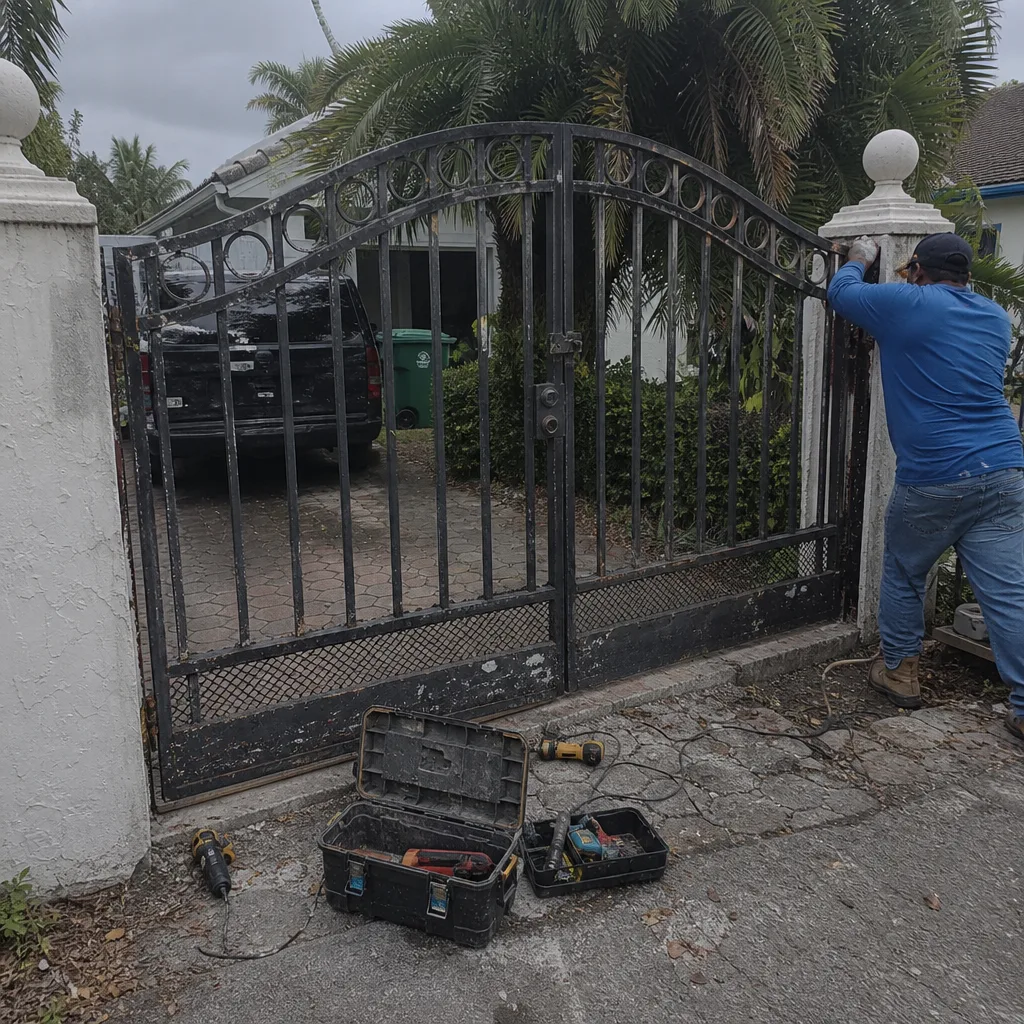 Before
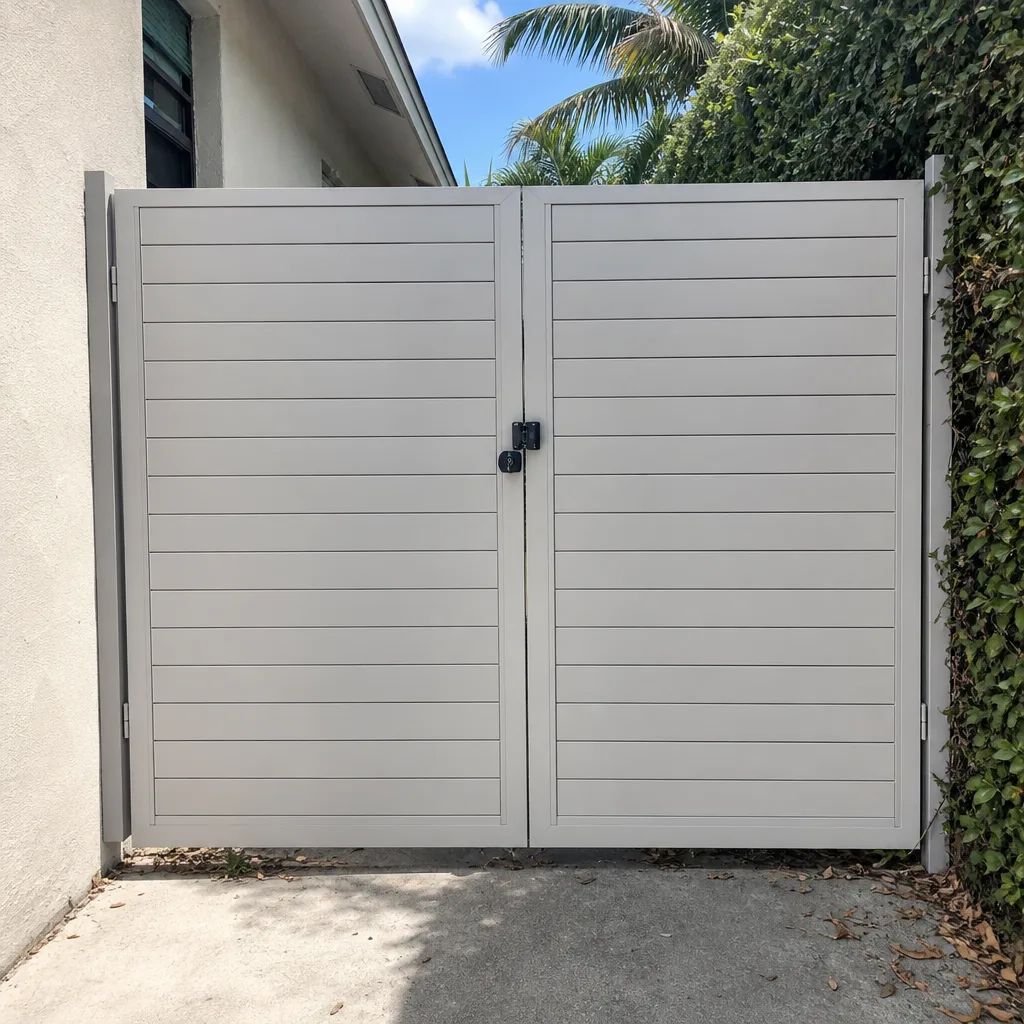 After
After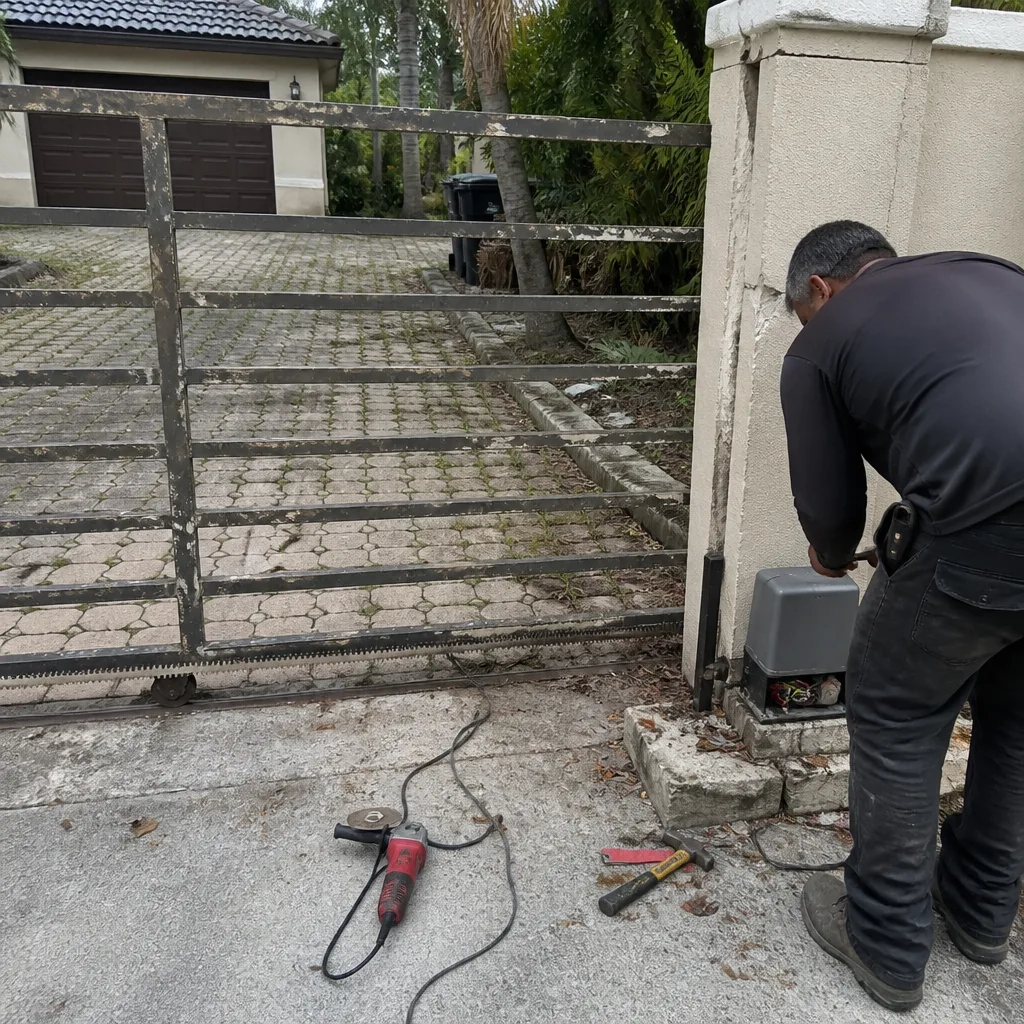 Before
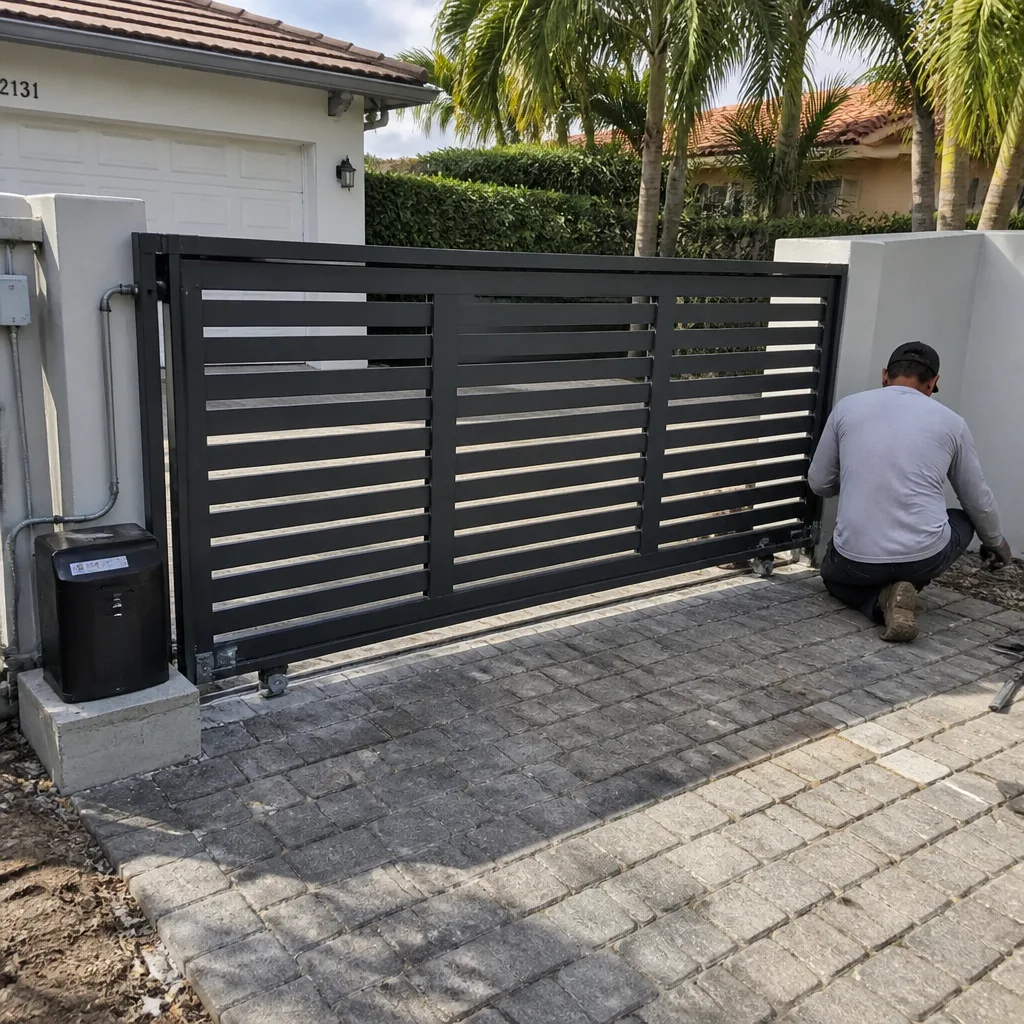 After
After Before
 After
After